

What Tide Is Best for Surfing? A Complete Guide to Reading the Water
Low, mid, high, rising or falling: here is how tide changes the way waves break at beaches, reefs and points, and how to pick the right window for your skill level.
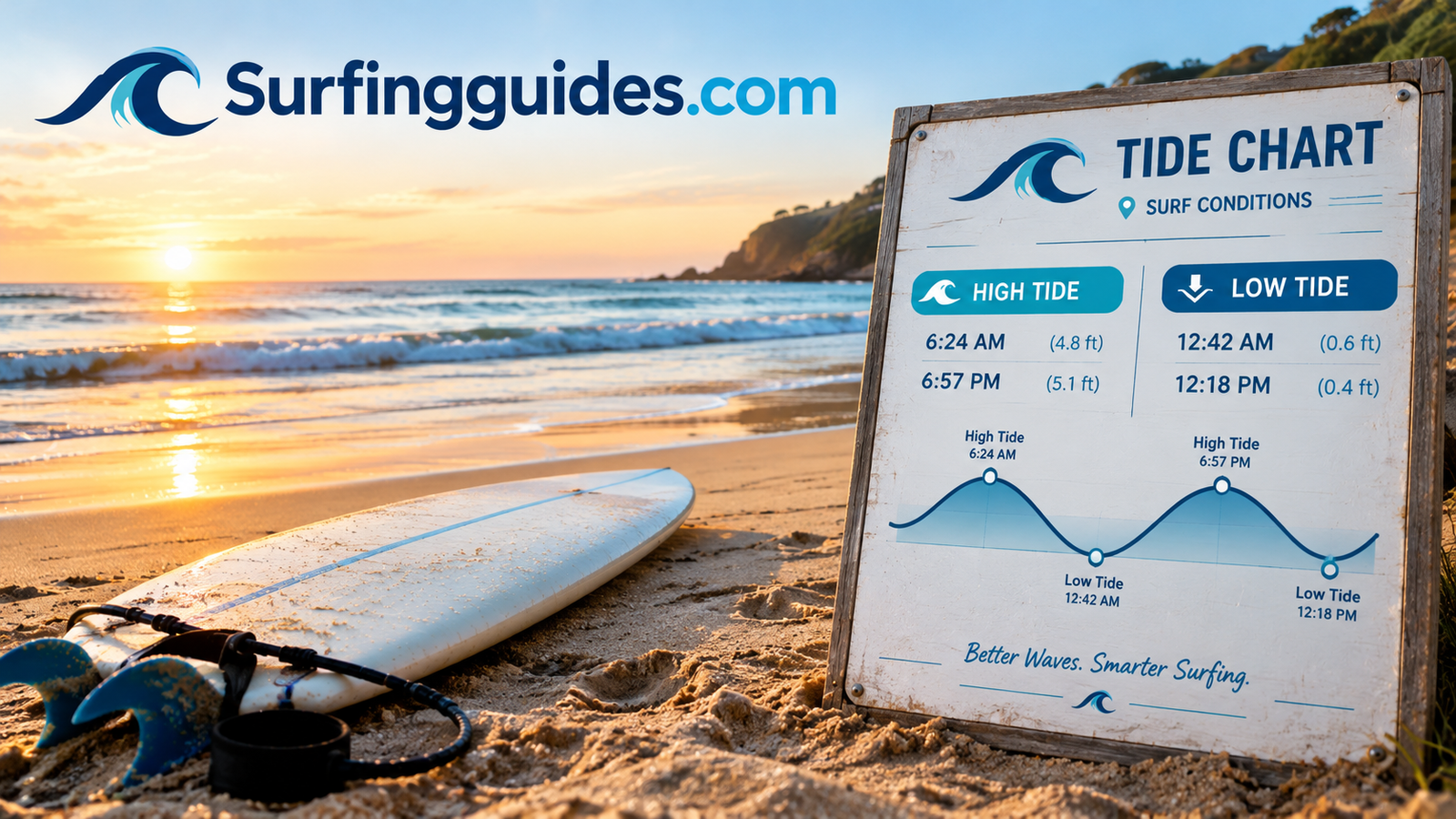
Ask ten surfers what tide is best and you will probably hear ten different answers. One swears by an incoming mid tide, another only paddles out at low, and a third will tell you their home reef is useless unless the water is nearly full. They are all right, because the best tide for surfing depends on where you surf, what the swell is doing and how much experience you have. This guide breaks the question down so you can stop guessing and start planning your sessions around the water instead of just the weather.
Quick Answer
- Most beach breaks: mid tide, ideally a rising mid tide, gives the cleanest and most forgiving waves.
- Shallow reefs: mid to high tide is safer and less hollow; low tide can be excellent but is far more dangerous.
- Point breaks: often best from mid to low tide, when the wave wraps and peels along the rocks.
- Beginners: aim for a mid to high tide on a small, soft swell so the waves are slower and the water is deeper.
- Always: check the local tide chart and then watch the break for ten minutes before paddling out.
1. What Tide Is Best for Surfing? The Short Answer
If you want a one-line rule, here it is: the best tide for surfing is usually the one that lets waves break progressively across a sandbar or reef instead of dumping all at once on the shore. At most beach breaks that means a mid tide, either rising or just past the middle of the cycle. The water is deep enough to cushion mistakes, but shallow enough that the sandbars still shape the swell into rideable shoulders.
The honest answer, though, is that no tide is universally best. Every surf spot has a personality shaped by the seabed, the direction it faces and the way swell energy arrives. A flat sandy beach in southern California, a volcanic reef in Hawaii and a rocky point in Portugal will each prefer different parts of the tidal cycle. Learning the tide for your home spot is one of the fastest ways to get more good waves per month without changing anything else about your surfing.
Think of the tide as a dimmer switch for the ocean floor. When the water is low, the bottom has more influence on the wave, so waves feel steeper, faster and more powerful. When the water is high, the bottom has less influence, so waves tend to be softer, fatter and sometimes mushy. Neither extreme is bad by itself. It just depends on what you want and what your skill level can handle.
New surfers often ignore tide completely, then wonder why a spot that was perfect on Saturday was a closed-out mess on Sunday. The swell and wind may have been identical. The water level was not. If you are just getting started, our guide on how to start surfing covers the fundamentals, and this article builds on that by teaching you to read the ocean clock.
| Tide Stage | General Effect on Waves | Typical Best For |
|---|---|---|
| Low tide | Steeper, faster, hollower; more bottom contact | Experienced surfers, certain points and reefs |
| Rising mid tide | Cleaner shape, more push, forgiving | Most beach breaks, all skill levels |
| High tide | Softer, slower, sometimes shore-dumping | Beginners, longboards, some reefs |
| Falling tide | Can groom waves, but currents get stronger | Point breaks, channels, river mouths |
Never miss the right window
A wrist tide watch shows you the water level at a glance, with no phone needed.
2. How Tides Actually Work
Before you can use tides to your advantage, it helps to understand what they are. Tides are the slow rise and fall of sea level caused mainly by the gravitational pull of the moon, with a smaller contribution from the sun. As the Earth rotates, coastlines pass through bulges of water, which is why most places see the water climb up the beach, peak, and then drain away again over several hours.
Semidiurnal, diurnal and mixed tides
Not every coastline follows the same rhythm. Many Atlantic coasts have semidiurnal tides: two highs and two lows each day, roughly six hours apart. Some regions, including parts of the Gulf of Mexico and Southeast Asia, have diurnal tides with just one high and one low per day. The Pacific coast of North America tends to have mixed tides, where the two highs and two lows of the day are noticeably different in height. This matters because a mixed-tide coast might give you one very low tide in the morning and a much gentler one in the evening.
Tidal range
Tidal range is the vertical distance between high and low water. In some places, such as many Pacific islands and parts of the Mediterranean, the range is under a metre. In others, like parts of the Bay of Fundy or the north coast of France and the UK, it can exceed ten metres. A large range means the surf spot can change dramatically across a session. A small range means tide matters less, although it can still shift the best peak by a few metres.
Tide height versus tide movement
Two ideas often get mixed up. Tide height is how high or low the water is at a specific moment. Tide movement is whether the water is rising (flooding) or falling (ebbing), and how fast. The fastest movement happens in the middle of the cycle, which is why strong currents often appear around mid tide at harbours, river mouths and tidal channels. Slack water, around high and low, is the calm pause when little movement occurs.
- High tide: the peak water level.
- Low tide: the minimum water level.
- Flood or incoming tide: the period when water is rising.
- Ebb or outgoing tide: the period when water is dropping.
- Slack water: the short pause at the top or bottom of the tide.
Learn your local tides
A compact tide and current guide keeps the numbers handy for road trips and new breaks.
3. Why Tide Changes the Way Waves Break
A wave is a travelling pulse of energy. Out in deep water it is just a gentle rolling swell. As it approaches shore and the water gets shallower, the bottom drags on the base of the wave, which slows it down, shortens its length and pushes the water upward. Eventually the top of the wave outruns the base, the face steepens and the wave breaks. The depth at which this happens depends on the size of the wave, but it also depends on how deep the water is overall, which is where the tide comes in.
The depth effect
At low tide, the same sandbar or reef sits closer to the surface. A swell that would pass over it quietly at high tide now trips on it, standing up suddenly and throwing out a hollow lip. At high tide, that same bar is buried deeper, so the swell rolls over it, loses less energy and tends to break closer to the beach, often with less shape and more of a crumbling feel.
Where the wave breaks
Tide also moves the location of the break. On a rising tide, the peak often shifts toward the beach and then may jump to the inside bar. On a falling tide, it migrates seaward and can start working on outer banks. This is why a surfer who is parked in the right spot at 8 a.m. may be sitting in dead water by 10 a.m. Watching where the white water forms is more useful than any chart.
Wave shape and power
- Shallow water amplifies steepness: lower tide usually means faster, hollower waves.
- Deeper water softens waves: high tide often means rounder, slower faces.
- Backwash and shorebreak: at high tide on steep beaches, waves rebound off the sand and create messy, chopped-up conditions.
- Exposed hazards: low tide uncovers rocks, shallow reef and sandbars that can injure surfers.
A simple way to remember it: low tide concentrates wave energy into a smaller zone, high tide spreads it out. That concentration can create epic barrels or ruthless closeouts, depending on the seabed shape. For many people the sweet spot is the middle ground, which brings us to the next section.
| Factor | Low Tide | High Tide |
|---|---|---|
| Wave steepness | Higher | Lower |
| Wave speed | Faster | Slower |
| Hazard exposure | Rocks and reef more exposed | Hazards covered but still there |
| Paddling effort | Longer walk or paddle on flat beaches | Shorter, but possible strong shorebreak |
| Crowd tendency | Often thinner at difficult spots | Often busier for beginners |
Stay warm through every tide
Water temperature shifts with tide and season. A good wetsuit keeps you out there longer.
4. Best Tide for Surfing Beach Breaks
Beach breaks are the most common type of surf spot in the world and the most flexible when it comes to tide. The waves break over shifting sandbars, which means the shape of the seabed changes with storms and currents. Because of that, a beach break can work on almost any tide, but there is almost always a window where it performs best.
Why mid tide usually wins
At mid tide, the water is deep enough that waves do not slam straight onto dry sand, yet shallow enough that the bar still organises the swell. You tend to get a longer ride, a clearer shoulder and a more consistent peak. If you are not sure when to go, show up about two hours before high tide on a rising tide and check what you see. Many beaches hit their stride during this window.
When low tide works at a beach break
On beaches with a steep profile, low tide can expose a sharper bar, producing powerful, punchy waves. This can be a great time for advanced surfers on small to medium days. On flat, wide beaches, though, low tide often means waves peel off far from shore, close out in one go or lose their energy before reaching you. You may also have a long walk to the water.
When high tide works at a beach break
High tide can be excellent when the swell is large, because the extra depth stops the waves from breaking too heavily on the bar. It is also friendlier for longboarders who like a slow, rolling wall. The danger is the shorebreak: on steep beaches, waves dump hard right at the water line, making entry and exit tricky and sometimes risky for your board and body.
Mid Tide Pros
- Best balance of power and shape
- Safer entry and exit
- Usually a longer ride
- Suitable for most skill levels
Mid Tide Cons
- Short window of ideal conditions
- Currents can be strongest
- Often the busiest time in the water
If you plan to surf a beach break regularly, keep a simple log: write down the tide height, swell size and how the waves felt. After a few weeks, you will notice a pattern that no forecast can give you. Pair that with the right gear, which we cover in our guide on what you need for surfing, and your sessions get much more productive.
Dial in your beach break setup
A reliable leash keeps your board close when shorebreak gets messy.
5. Best Tide for Surfing Reef Breaks
Reef breaks are where tide matters most. Waves break over a fixed structure of rock or coral, so the water depth above it directly controls how the wave behaves. The same reef can offer playful, user-friendly rides at one stage of the tide and a shallow, dangerous slab at another.
Low tide at reefs
At low tide, many reefs create their hollowest and most powerful waves. Elite surfers chase these conditions for tubes. But the risk is real. Shallow coral and sharp rock can cause deep cuts, broken boards and serious injury. If you are not experienced with the specific reef, low tide is usually not the time to learn it. Booties and a helmet help, but they do not make a shallow reef safe.
Mid to high tide at reefs
Many reefs surf best from mid to high tide. The extra water softens the take-off, adds a safety margin over the bottom and often lets the wave peel more evenly. On some reefs, though, high tide turns the wave into a lazy, rolling line that does not break cleanly. Local knowledge is gold here. Ask someone who surfs the spot regularly, or watch a few sets before entering.
Swell size changes the answer
A small swell may need low tide to wake the reef up. A large swell may need high tide to keep the waves from becoming too heavy. In other words, tide and swell size are partners, and the best tide for a reef often moves around depending on the day.
| Reef Scenario | Recommended Tide | Why |
|---|---|---|
| Small swell, shallow reef | Low to mid | Reef needs help to shape the wave |
| Medium swell, familiar reef | Mid | Balanced power and safety |
| Large swell, heavy reef | Mid to high | Extra depth softens the break |
| First time at a reef | Mid to high | More margin for error |
Protection for your feet is non-negotiable at many reefs. See our roundup of the best surfing booties for options that offer grip and cut resistance.
Protect your feet on the reef
Thick-soled reef booties help with rocky entries and sharp coral.
6. Best Tide for Point Breaks and River Mouths
Point breaks occur where swell wraps around a headland, producing long, peeling waves that can be ridden for hundreds of metres. Because these waves rely on a specific bottom contour along the point, tide influences how well that contour works.
Point breaks
Many points work best from mid to low tide, when the rocks or cobblestones lining the bottom are close enough to shape the wave into a clean, even wall. At high tide, the wave may become soft, slow or hard to connect between sections. Some points, especially sandy ones, flip the pattern and prefer a higher tide. Again, the local rule trumps the general rule.
Pay attention to the size of the swell as well. A small swell may barely wrap around the point at high tide, but a bigger swell can turn the same section into a long, perfect line. When in doubt, watch the first few sets and see where the energy lines up.
River mouths and estuaries
River mouth breaks are special because tide, river flow and sand movement all interact. A falling tide can push strong outflow against incoming swell, which grooms the wave and makes it steeper and sometimes hollower. A rising tide can slow the outflow and push sand toward the beach, often changing the shape of the bar over the course of a session.
- Ebb flow: can create powerful currents that carry you away from the peak, so stay aware of your position.
- Flood tide: often brings cleaner water and gentler currents in the channel.
- After heavy rain: river mouths may carry debris and pollution, so check local water quality alerts.
Because currents at these spots can be strong, they are not ideal for first sessions. If you are still building confidence, work through our article on whether surfing is hard to set realistic expectations before you tackle more complex breaks.
Keep your gear secure in strong currents
A comfortable ankle leash is essential when you are surfing long point waves.
7. Rising Tide vs Falling Tide: Which Is Better for Surfing?
Many surfers say they prefer a rising tide, and there are good reasons behind that preference. When the water is flooding in, it tends to push into the surf zone, lifting the swell, clearing out some of the choppy backwash and generally cleaning up the face. As the water level climbs, the break often moves toward shore in a way that keeps the waves lined up and surfable.
Why surfers like a rising tide
- Waves often feel fuller and cleaner with more push.
- The lineup usually improves as more water covers the bar.
- Paddle-outs can be easier as incoming water assists your path.
- Sets often stay organised during the first few hours of the flood.
When a falling tide wins
A falling tide has its own strengths. As the water drains off the sandbars, it can groom the waves, creating steeper faces and a more defined peak. At point breaks and river mouths, the outflow stands up the incoming swell, which can improve shape. The downside is that you can be dragged along the beach or out toward the channel, and shallow areas appear faster than you expect.
| Feature | Rising Tide | Falling Tide |
|---|---|---|
| Wave quality | Cleaner, fuller | Steeper, can be hollower |
| Currents | Usually shoreward push | Can pull seaward or along the beach |
| Sandbar exposure | Gradually covered | Progressively exposed |
| Risk level | Moderate | Moderate to higher in shallow areas |
| Best for | Most beach breaks | Some points, river mouths |
None of this is a law of nature. Plenty of great sessions happen on a dropping tide. The point is to stay curious: notice what the water does in each direction at your regular spot and keep notes. Over time you will build a mental map of when the break turns on and when it shuts down.
Track every session
A waterproof notebook is perfect for logging tide, swell and what worked.
8. Spring Tides vs Neap Tides and Their Effect on Surf
Over the lunar month, the size of the tidal range changes. When the sun, moon and Earth line up around the new and full moon, their combined pull creates spring tides: higher highs and lower lows. Around the quarter moons, the pull partly cancels out, producing neap tides with a smaller range. Despite the name, spring tides have nothing to do with the season.
Spring tides
During springs, the water moves more, and currents are stronger. Low tides drop further, exposing more sandbar and reef. High tides climb higher, sometimes flooding the upper beach. For surfers, this means the break changes more dramatically across the day. A spot that was easy at neap may become shallow and critical at spring low tide. Strong currents at tidal inlets can also make paddling harder.
Neap tides
Neap tides produce a gentler tidal change. The water level shifts less, so the break holds a similar shape for longer. This can be helpful for beginners and anyone who wants consistent conditions through a longer session. The trade-off is that you may not get that magic low-tide hollowness at a reef, and some spots may feel sluggish.
| Condition | Spring Tide | Neap Tide |
|---|---|---|
| Moon phase | New and full moon | First and last quarter |
| Tidal range | Larger | Smaller |
| Currents | Stronger | Weaker |
| Wave variability | Big changes through the day | More stable through the day |
| Best for | Experienced surfers, specific reef and point setups | Beginners, steady sessions |
Plan around the moon
Wall or pocket tide calendars make it easy to spot spring and neap weeks.
9. How Tide, Swell and Wind Work Together
Tide is only one ingredient. The best session happens when tide, swell size, swell period, swell direction and wind line up. If one of these is off, you may have to adjust your expectations or your plan.
Swell size
As a rule, small swells benefit from lower or mid tide because the bottom needs to catch the wave and make it break. Large swells often need higher tide to avoid closing out. This relationship explains why a spot can be unsurfable at low tide on a big day, yet fantastic at high tide with the same swell.
Swell period
Swell period, the time between successive waves, indicates how much power the swell carries. Long-period swells hold more energy and feel the bottom earlier, so they can break farther out and be affected strongly by tide. Short-period wind swells are weaker and tend to be less sensitive, though they are also often messier.
Swell direction
The angle of the swell controls which part of a beach, reef or point works. Tide can switch different sections on or off as the water level changes, so a peak that is perfect at mid tide may fade at high tide while another section wakes up.
Wind
Offshore winds, blowing from land to sea, groom waves and hold them up longer. Onshore winds, blowing from sea to land, chop the surface and push waves to break early. Tide changes can affect how wind feels on the water too. A rising tide at a beach that faces onshore wind may bring more choppy conditions, while a falling tide with an offshore breeze can make the face glassy and hollow.
| Condition Combo | Likely Result |
|---|---|
| Small swell + low to mid tide + light offshore | Clean, rideable waves, often a great learning day |
| Big swell + low tide + onshore wind | Closeouts and heavy, messy surf; avoid |
| Medium swell + mid tide + offshore | Often the dream scenario at beach breaks |
| Big swell + high tide + light wind | Softer, more manageable waves at many reefs |
When you check the forecast, put all the numbers together rather than relying on just one. A wet and cold session can still be fantastic if the tide and swell are right, provided you are dressed properly. For a deeper dive on what to wear in different conditions, take a look at our guide on what to wear surfing.
Gear up for cold and windy sessions
Cold-water conditions are common at dawn and dusk when tides are often best.
10. Best Tide for Surfing by Skill Level
The right tide for you is not the same as the right tide for a pro. Matching the water level to your ability keeps sessions fun and prevents injuries.
Beginners
New surfers should look for mid to high tide on small, soft waves. The extra depth means less chance of hitting the bottom, and the waves are usually slower and easier to catch. Look for a sandy beach break, pick a day with a gentle swell and stay in the white water or small shoulder-high waves while you learn. Avoid shallow reefs, steep beaches with heavy shorebreak and strong tidal currents.
Intermediate surfers
As your skills grow, you can start exploring mid tide and even slightly lower stages when the waves are clean. This is a good time to experiment with different spots and learn how each one changes through the tide. Keep a log, watch other surfers and talk to locals. Your wave count will climb quickly once you stop paddling out at random times.
Advanced and expert surfers
Experienced surfers often chase low tide at reefs and points for power, shape and barrels. They have the skills to read the water, handle shallow take-offs and deal with currents. Even so, experts still use caution and local knowledge, especially at new or heavy breaks.
| Skill Level | Recommended Tide | Spot Type | Wave Size |
|---|---|---|---|
| Beginner | Mid to high | Sandy beach break | Knee to waist high |
| Intermediate | Rising mid, some low | Beach breaks, gentle points | Waist to head high |
| Advanced | Mid to low | Reefs, points, hollow beach breaks | Head high and above |
Why Beginners Prefer Higher Tide
- Deeper water reduces bottom contact
- Slower, more forgiving waves
- Easier paddling in less powerful conditions
Watch Out For
- Shorebreak on steep beaches
- Crowds in the easiest spots
- Mushy waves that lack shape
If you are just starting out, a soft-top foamie is far more forgiving than a hard board. Check our beginner surfing guide for step-by-step advice and gear tips.
Start on the right board
A foam beginner board makes mid and high tide sessions much more fun.
11. Safety, Currents and Tides
Tide is not just about wave quality. It affects safety in ways that surprise even experienced surfers. Understanding the hazards that come with different water levels can prevent injuries, lost gear and dangerous situations.
Rip currents and channels
Rip currents form when water piles up on the shore and escapes back out through a gap in the sandbar. Tide influences how strong they are. Around low tide on a beach with defined bars, water concentrated in channels can create powerful rips. Surfers often use rips as a conveyor belt to get past the break, but you should know how to handle one: stay calm, do not fight it head-on and paddle parallel to shore until you are out of it.
Exposed rocks and reef
Low tide can reveal hazards that were hidden an hour earlier. Rocks, urchins, coral and old debris become much more of a threat to feet, legs and boards. Keep your eyes on the water and avoid surfing over areas you cannot see clearly.
Tidal currents at inlets
Harbour mouths, river inlets and estuaries can have fast tidal flows, especially during spring tides. These currents can drag you away from your entry point or into structures such as piers and jetties. If you are not experienced, avoid surfing these zones during peak flow.
Getting trapped by the incoming tide
At beaches that are backed by cliffs or rocky headlands, a rising tide can cut off your path back to the car. Always check the tide times and be sure you can exit safely, especially if you are walking along the shore to reach a remote spot.
Safety checklist
- Check the tide chart and local surf report before you leave home.
- Watch the break for at least ten minutes to see sets, currents and hazards.
- Surf with a friend, or at least where other surfers are in the water.
- Know where lifeguards or emergency access points are located.
- Wear a leash and, at shallow breaks, consider a helmet and booties.
- Never turn your back on the ocean at the water line.
Add extra protection
A surf helmet is a smart upgrade for shallow reefs and crowded lineups.
12. Tools and Gear for Surfing the Right Tide
Knowing the best tide is only useful if you can find out what the tide will be and be ready to take advantage of it. A mix of apps, simple instruments and practical gear makes this easy.
Where to check the tide
- Surf forecast websites and apps: most combine tide charts with swell, wind and weather in one view.
- Local tide tables: official charts from your coastal authority are often the most accurate source of tide times.
- Webcams: a live view of your break lets you see how the waves are behaving at different water levels.
- Local surf shops and lifeguards: great sources of real-time and long-term tide knowledge.
Tide watches and tide clocks
A tide watch is a simple wrist device that shows the tide stage for a specific region. It is not as precise as a chart but is handy for quick checks, especially on beaches without phone signal.
Gear that helps you stay out longer
- Wetsuit: the best tide windows often fall in cooler early mornings or evenings. For cold seasons, see our picks for the best cold water wetsuit for surfing and our guide to how much a wetsuit costs.
- Layers under your suit: see what to wear under a wetsuit for surfing for comfortable options.
- Booties and gloves: reef and rocky entries at low tide are easier with proper footwear.
- Action camera: filming sessions lets you review how the waves broke at different tides. Check our guide to the best action camera for surfing.
- Sunscreen and rash guard: long dawn-to-midday sessions mean more sun exposure.
| Tool | What It Tells You | Best Use |
|---|---|---|
| Tide chart or app | Exact high and low times and heights | Planning your day |
| Tide watch | Quick tide stage | On-the-spot checks |
| Surf cam | Live wave behaviour | Deciding whether to go |
| Session log | Personal patterns at your spot | Long-term improvement |
Over a few months, combine charts, notes and your own observations. Eventually, you will be able to glance at the tide table and know instantly whether a session is worth the effort.
Capture your best waves
Review your sessions to see exactly how each tide changed the break.
Frequently Asked Questions About Surfing Tides
What tide is best for surfing overall?
For most beach breaks, a mid tide, particularly a rising mid tide, gives the best combination of shape, power and safety. However, the ideal tide varies with the type of break, swell size and local seabed, so it is worth learning how your own spot behaves.
Is high tide or low tide better for surfing?
Neither is automatically better. Low tide produces steeper, faster waves that can be excellent for experienced surfers at the right spots. High tide produces softer, slower waves that suit beginners and longboarders. Many breaks perform best somewhere in the middle.
What is the best tide for beginner surfers?
Beginners usually do best on a mid to high tide at a sandy beach break with small, gentle waves. The extra water depth reduces the risk of hitting the bottom, and the waves tend to be slower and more forgiving.
Is a rising or falling tide better for surfing?
Many surfers prefer a rising tide because it often cleans up the waves and brings more push into the surf zone. A falling tide can groom the face and work well at some points and river mouths, but it may also create stronger currents and expose shallow areas more quickly.
Can you surf at low tide?
Yes, you can, and at some spots low tide is when the waves are best. However, low tide can expose rocks, coral and shallow sandbars, and waves may become hollow or close out. It is generally a better choice for experienced surfers who know the break.
Can you surf at high tide?
Absolutely. High tide is often a good option for beginners and longboarders because waves are softer. The downside is that on steep beaches, waves may dump in a heavy shorebreak, and some reefs and points become too soft or stop working altogether.
What tide is best for surfing reef breaks?
It depends on the reef and the swell. Many reefs work best at mid to high tide, which gives more depth and safety. Some shallow reefs become world-class tubes at low tide, but they are dangerous. If you do not know a reef well, choose a higher tide and watch locals first.
How do I find the best tide for my local surf spot?
Check a tide chart for the day, then observe the break at different tide stages over several sessions. Keep a simple log of tide height, swell and wind. You can also ask local surfers, check surf cams and talk to staff at nearby surf shops.
Do spring tides make surfing better or worse?
Spring tides bring a larger tidal range and stronger currents. They can make certain reefs and points excellent at specific stages but also make conditions change faster and become riskier. Neap tides give more stable conditions, which many beginners find easier to manage.
Does tide affect wave size?
Tide does not change the size of the swell itself, but it changes how the swell breaks. Waves can look bigger and steeper at low tide because they break in shallower water, while at high tide they can look smaller and softer even if the swell is the same.
Is it safe to surf during a strong outgoing tide?
It can be risky, especially near river mouths, harbour entrances and inlets where tidal currents are strong. A strong ebb flow can push you away from the shore or into hazards. If you are inexperienced, choose a calmer stage of the tide or a different spot.
What tools should I use to check surf and tide conditions?
Use a reliable surf forecasting app or website that includes tide data, along with official local tide tables. A tide watch, live surf cam and a personal session log can help you refine your understanding over time.
Ready to chase the perfect tide?
Browse essential surf accessories to make every session smoother.
Conclusion: Let the Tide Work for You
So, what tide is best for surfing? For most surfers at most beach breaks, a mid tide on the rise is the safest bet. For beginners, mid to high tide on small waves keeps things forgiving. For experienced surfers at reefs and points, lower tides can unlock the best shape, though they come with higher risk. And for everyone, the real answer is to learn the personality of your local break.
Start simple. Check the tide chart before every session, watch the water for a few minutes, and take notes on how the waves behave. Combine that with the swell and wind forecast, and you will soon recognise patterns that turn average sessions into great ones. Tides are predictable, which makes them one of the easiest advantages in surfing to use.
Bring the right gear, respect the ocean and keep exploring. The more tides you surf, the more waves you will catch.
Get everything you need for your next session
From wax to wetsuits, stock up before the next good tide rolls in.