
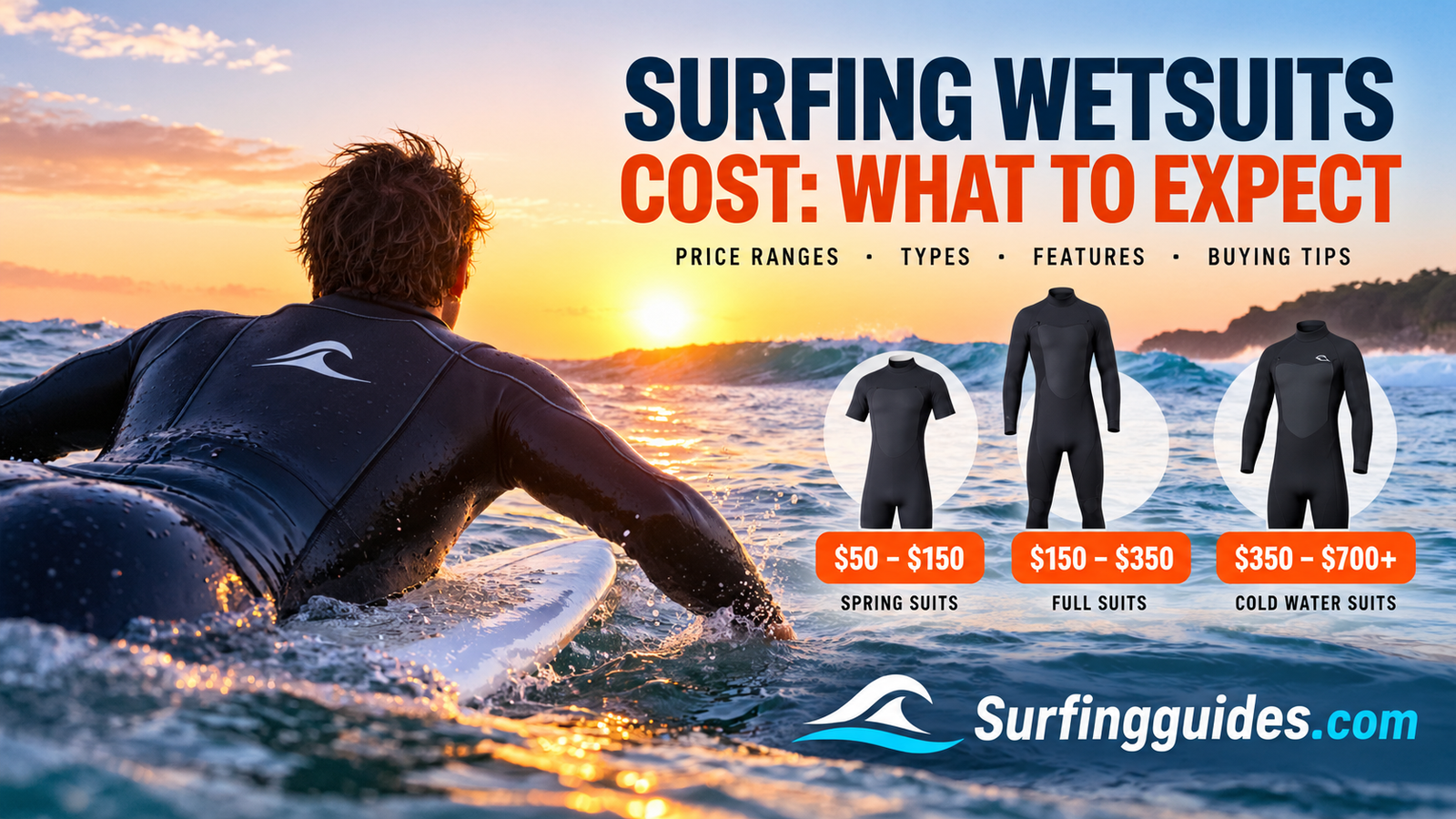
How Much Is a Wetsuit for Surfing? The Complete Price Breakdown
From budget picks to premium builds, here is what surf wetsuits really cost, what you get at each price, and how to spend smart.
This guide contains affiliate links. If you buy through them we may earn a small commission, at no extra cost to you.
You are standing in a surf shop, or scrolling a product page, and one wetsuit costs less than a pair of jeans while the one next to it costs more than a decent used surfboard. Same basic idea, wildly different tags. So how much is a wetsuit for surfing, and more importantly, how much should you spend?
The honest answer is that most surfers pay somewhere between roughly $100 and $450 for a full-length wetsuit that suits their local water. Beginners in warm regions can get started for far less. Surfers chasing frigid winter swells or the lightest, stretchiest neoprene can easily go past $500. The number on the tag depends on a handful of things we are going to unpack one by one: the rubber itself, how the seams are built, how thick the suit is, who it is cut for, and which brand put its name on it.
This guide is built to take the guesswork out. We will walk through typical price ranges, explain what each extra dollar actually buys, compare budget, mid-range and premium tiers, look at the costs people forget (booties, gloves, hoods, repairs), and finish with a simple way to work out the real cost per session. If you are brand new to the sport, our guide on how to start surfing pairs well with this one, and it will help you decide how serious a purchase you need to make on day one.
1. The Short Answer: Typical Wetsuit Prices at a Glance
Let us start with the quick version, because most people landing on this page want a number first and the reasoning second. Prices vary by region, retailer, season and model, so treat the figures below as realistic ballparks in US dollars rather than exact quotes.
Quick price snapshot
- Budget full suit: about $80 to $160
- Mid-range full suit: about $160 to $320
- Premium full suit: about $320 to $650 and up
- Spring suit or shorty: about $50 to $200
- Neoprene top, vest or jacket: about $30 to $120
- Kids’ wetsuit: about $50 to $200 depending on thickness
| Tier | Typical Price (Full Suit) | Who It Suits | What You Usually Get |
|---|---|---|---|
| Budget | $80 to $160 | Beginners, occasional surfers, warm water | Basic neoprene, glued and blind-stitched or flatlock seams, simple lining |
| Mid-range | $160 to $320 | Regular surfers, most climates | Better stretch, sealed seams, quicker-drying lining, improved entry system |
| Premium | $320 to $650+ | Frequent or year-round surfers, cold water | Ultra-stretch or limestone-based foam, taped seams, thermal lining, refined fit |
If you only remember one thing from this section, remember this: the right wetsuit is the one that matches your water temperature and fits like a second skin. A $180 suit that fits perfectly will keep you in the water longer than a $500 suit that bags at the lower back and flushes cold water down your spine. Price matters, but fit and thickness matter more.
It is also worth knowing that a wetsuit is not an all-or-nothing purchase. Plenty of surfers own two: a thin suit for summer and a thicker one for winter. Others stack costs over time, starting with a budget suit while they learn, then upgrading once they know how often they paddle out and what they actually want from the gear. We will come back to that idea in the buying strategy sections.
Why prices differ so much from shop to shop
Two retailers can charge noticeably different amounts for the exact same suit. Local surf shops carry rent, staff and fitting rooms, so their prices often sit closer to the full list price, though they offer the huge advantage of letting you try on several sizes. Large online retailers can discount more aggressively, particularly at the end of a season, but you take on the hassle of returns if the fit is off. Prices also shift by region: suits cost more in places with limited competition, and shoppers near big surf towns often see better sales because shops are clearing stock constantly.
Currency, shipping and taxes can change the picture too. If you shop internationally, factor in delivery costs and any import duties before deciding that a bargain is really a bargain. A suit that looks fifty dollars cheaper abroad can easily lose that advantage once everything is added up.
How to read a price tag like a surfer
Before you compare numbers, check what is included. Some listings show the price for a single size or color while others quote a range, and sale tags sometimes apply only to certain sizes. Confirm the thickness, the seam type and whether the suit is a full suit or a spring suit. If a listing leaves any of that out, assume you are looking at the cheapest version of the product. A clear, detailed description is usually a sign of a seller who knows the product, which is another small reason to prefer retailers that publish full specifications.
Want to see what is available at every price point right now?
Browse Surfing Wetsuits on Amazon2. What Drives Wetsuit Prices: Neoprene, Seams, Linings and Labor
Two wetsuits can look nearly identical on a hanger and still sit $300 apart. The difference is almost always hidden in the materials and construction. Understanding those details is the fastest way to tell whether a higher price is justified or just a nicer logo.
The neoprene itself
Neoprene is a synthetic rubber filled with tiny gas bubbles, and those bubbles trap heat. Cheaper suits typically use conventional petroleum-based neoprene, which is warm but relatively stiff and heavy once it absorbs water. More expensive suits use foam that is lighter, more flexible and often more water-resistant, so it stretches further, dries faster and feels less restrictive when you paddle. Some brands use limestone-derived or plant-based rubber, which can cost more to source and process but offers excellent stretch and lower environmental impact. You pay a premium for that softness, and honestly, you feel it by the end of a long session.
Seam construction
Seams are where a wetsuit leaks, so how they are joined is a major cost driver. Here is how the common methods compare:
| Seam Type | How It Works | Warmth | Typical Price Impact |
|---|---|---|---|
| Flatlock stitch | Panels stitched flat, creating tiny channels for water | Low; best for warm water | Lowest cost |
| Glued and blind-stitched (GBS) | Panels glued, then stitched partway through | Medium to good | Moderate cost |
| GBS with liquid or taped sealing | Seams sealed with tape or liquid rubber | High | Higher cost |
| Welded or glued-only seams | No stitching; panels bonded and taped | Very high, very flexible | Highest cost |
Stitching is labor, glue is labor, and tape is labor plus extra material. Every added step nudges the price upward, and every step also reduces the number of tiny pinholes that let water in. If you surf cold water, that sealing is worth paying for. If you surf in a place where the water feels like a bath, flatlock seams are perfectly fine.
Linings and warmth tech
The inside of a wetsuit matters as much as the outside. Basic suits use a plain jersey lining that soaks up water and feels clammy on a cold morning. Better suits use quick-dry fleece, grid-pattern or thermal linings, sometimes with a metallic or fibrous layer that reflects body heat. These linings are more expensive to manufacture and often cover the chest and back, which are the areas that matter most for warmth.
Entry systems
How you get in and out of the suit changes both cost and performance. A traditional back zip is common on budget and mid-range suits and is easy to use, but the zipper opening can let water in. A chest zip uses fewer panels in the back, which means better stretch and a tighter seal, but it is harder to get into. Zipperless entry designs use stretchy collar and chest panels and are among the priciest because they demand complex patterning and high-stretch material.
Brand, R&D and design
Finally, you are paying for the design team. Large surf brands spend heavily on pattern cutting, fit testing and athlete feedback. A suit that has been refined across many generations tends to fit more people well, and that fit is part of what you buy. We will look at this more closely in the brands section, but keep it in mind: a higher price is not automatically a better wetsuit, only a more developed one.
Rule of thumb: pay for warmth-critical features (sealed seams, a good lining, high-stretch rubber) if you surf cold water. Pay for fit and flexibility if you surf often. Skip the extras if you surf rarely or in warm conditions.
Warranty, durability and the cost you do not see on the tag
Some of what you pay for never shows up in a spec list. Better suits are typically built with tougher glues, stronger thread and more carefully reinforced stress points such as knees, shoulders and the crotch seam. These details rarely look exciting online, yet they determine whether a suit survives its second winter. Warranties and customer service count here too. A brand that stands behind its seams and zippers is effectively refunding part of your risk, which is a form of value you will not notice until something goes wrong.
Compare wetsuits by seam type, lining and stretch before you buy.
Shop Sealed-Seam Wetsuits3. Price by Thickness and Water Temperature
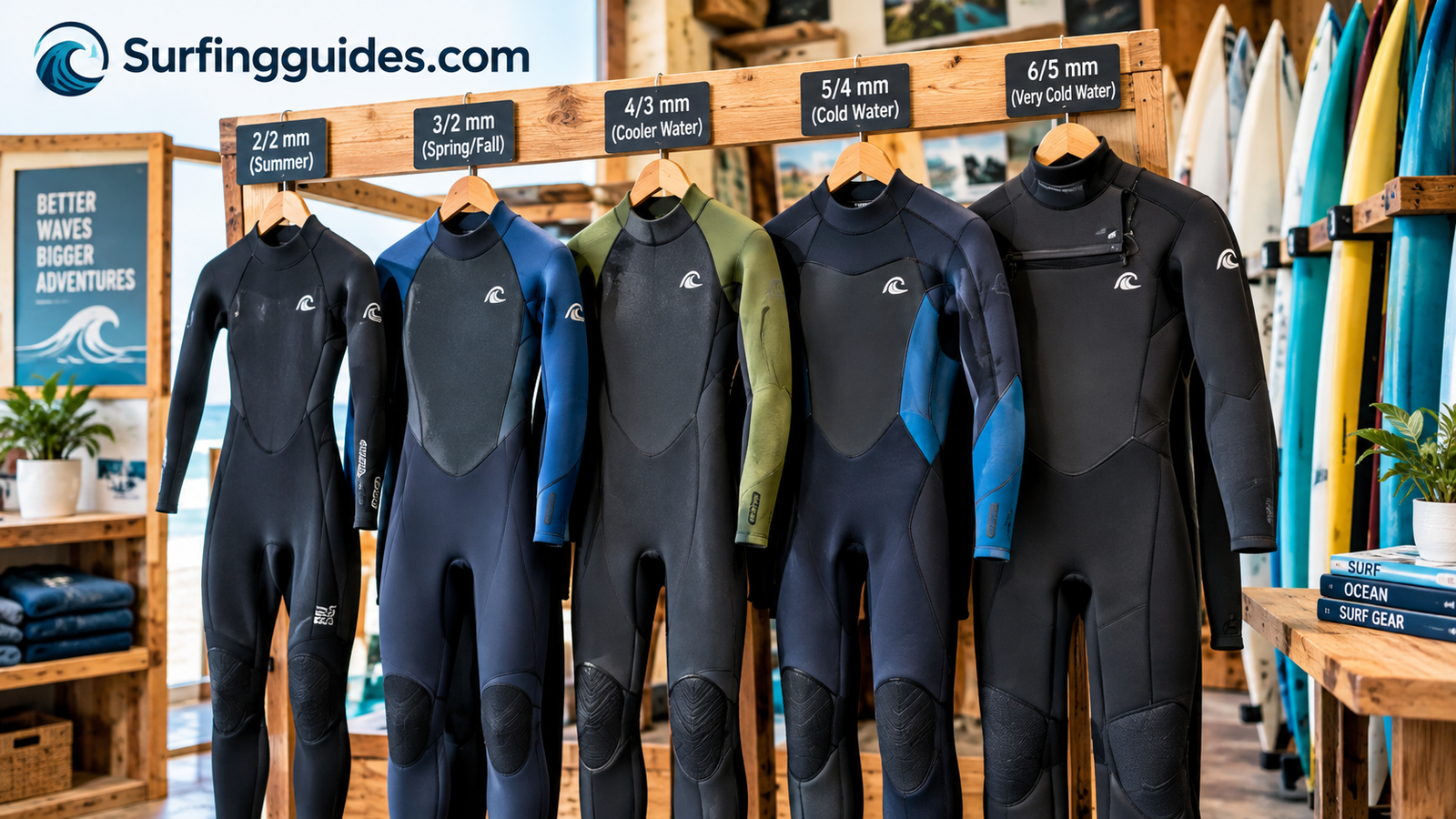
Thickness is the single biggest practical factor in choosing a wetsuit, and it also shapes the price. Thickness is written as two numbers, such as 3/2mm. The first is the neoprene thickness in the torso, where you need the most warmth. The second is the thickness in the arms and legs, where you need freedom to move. A thicker suit uses more material, usually more seam sealing, and often a warmer lining, so it costs more.
| Suit Thickness | Approx. Water Temp (F) | Typical Price Range | Best For |
|---|---|---|---|
| 1mm to 2mm (tops, shorties) | 70 and above | $40 to $150 | Summer sessions, tropical trips |
| 2mm full suit | 66 to 72 | $80 to $220 | Late summer, warm coastlines |
| 3/2mm full suit | 60 to 68 | $100 to $400 | The all-rounder for many surfers |
| 4/3mm full suit | 54 to 62 | $140 to $480 | Spring, fall, mild winter |
| 5/4mm full suit | 46 to 56 | $200 to $550 | Cold winter water |
| 6/5mm hooded suit | Below 50 | $260 to $650+ | Very cold or icy conditions |
Temperature ranges are guidelines, not laws. Some people run warm, some run cold, and wind, rain and session length all change how a suit feels. A surfer who stays in for three hours in a stiff breeze needs more insulation than someone doing a quick forty-minute session in glassy conditions.
The 3/2mm: the sweet spot for most surfers
If you surf in a region with moderate water temperatures for much of the year, a 3/2mm is likely your most-worn suit. It is also the most heavily produced, which means you will find the widest price range here. A decent budget 3/2 can be had for around $100 to $150. A well-built mid-range 3/2 with sealed seams and good stretch tends to sit between $180 and $300. High-end versions with advanced foam and taped seams climb above $350.
Going thicker: 4/3mm and 5/4mm
Once the water drops below the low sixties, a 4/3mm makes a big difference to how long you can stay out. These suits typically carry a modest price premium over a 3/2 from the same line, often $20 to $60 more. Moving to a 5/4mm increases the premium further because the suit usually adds a warmer lining, more complex seam sealing and sometimes a hood or hood-ready collar. If you are shopping specifically for frigid water, you will want to look at our dedicated roundup of the best cold water wetsuit for surfing to see how the top options stack up.
Why thicker is not always better
It is tempting to buy the thickest suit you can afford “just in case,” but that is a common beginner mistake. A suit that is too thick restricts your shoulders, makes paddling tiring and can cause overheating on mild days. Overheating is more than uncomfortable: it pushes you to cut sessions short. The better approach is to match thickness to your most common conditions and then layer accessories (like a hood or gloves) for the coldest days.
Pros of a thicker suit
- Longer, more comfortable sessions in cold water
- Better insulation from wind and rain
- Often includes warmer linings and sealed seams
Cons of a thicker suit
- Higher price and more weight when wet
- Less arm and shoulder flexibility
- Too hot in mild conditions
One smart move many surfers make is to buy two suits that bracket their conditions, for example a 3/2mm for summer and shoulder seasons plus a 4/3mm or 5/4mm for winter. Two mid-priced suits often cost less than one top-tier suit and give you better comfort across the year.
Matching thickness to real-world sessions
Charts are helpful, but real surfing is messier. Consider three typical surfers. The first paddles out on summer mornings when the sea is mild but the sun has not yet warmed the air. A 2mm or a 3/2mm suit is enough, and even a good budget model keeps them comfortable. The second surfs after work in spring, when the water is cool and an onshore wind picks up. A 4/3mm with sealed seams gives them the extra warmth they need to stay out for an hour. The third chases winter swells before dawn, with icy air and rain. For them, a 5/4mm or a hooded 6/5mm plus booties and gloves is not a luxury, it is the difference between a great session and a miserable one.
Notice that the price follows the conditions, not the other way around. When you start with your own water temperature and session length, the right thickness, and therefore a realistic budget, becomes much easier to pin down.
Layering as a money-saving tool
A neoprene vest or a thin jacket worn under a thinner full suit can extend its range by several degrees for a fraction of the cost of buying a thicker suit. Many surfers use a 3/2mm in summer and add a vest in spring and fall, saving both money and storage space. The trade-off is added bulk, and a slightly more cumbersome time getting dressed, but for occasional cold snaps it is a sensible fix.
Pick the right thickness for your water, then compare prices side by side.
See 3/2mm Surf Wetsuits4. Price by Wetsuit Type: Full Suits, Spring Suits, Shorties, Tops and More
Not every session calls for a head-to-toe suit. The type of wetsuit you choose changes the price as much as the thickness does, because less coverage means less material and fewer panels.
Full suits (steamers)
A full suit covers your torso, arms and legs. It is the standard choice for most surfers and the product most people mean when they ask how much a wetsuit costs. Expect $80 to $650 depending on tier, with the broadest concentration of popular models between $150 and $350.
Spring suits
A spring suit has short sleeves and short legs, or long sleeves with short legs, and is designed for in-between weather. These typically run $60 to $220. They are a good value for warm-water regions and for surfers who run hot, but they are not a replacement for a full suit if the water dips into the fifties.
Shorties and neoprene tops
A shorty covers the torso with short legs and short or no sleeves. Neoprene tops, vests and jackets cover just your upper body. Prices are low, commonly $30 to $120, and they make a handy extra for a tropical trip or a layering piece under or over a suit. If you are unsure what else to wear for warmth or comfort, check our guide on what to wear surfing for complete outfit ideas across seasons.
Hooded and hybrid suits
Hooded suits are built for very cold water. They add a hood to the neck opening and usually use thicker foam and sealed seams. Prices generally run from $220 to $650 or more. Because the hood is built in, you avoid buying a separate one, but you also lose the option to remove it on a mild day.
| Wetsuit Type | Coverage | Price Range | Typical Use |
|---|---|---|---|
| Full suit | Arms and legs, full length | $80 to $650+ | Year-round for most surfers |
| Spring suit | Short or long sleeves, short legs | $60 to $220 | Warm or transitional weather |
| Shorty | Torso with short arms and legs | $50 to $150 | Hot weather, travel |
| Long john or jane | Sleeveless, full-length legs | $50 to $180 | Paddle-heavy sessions, layering |
| Top, vest or jacket | Upper body only | $30 to $120 | Layering, mild water |
| Hooded full suit | Full body plus hood | $220 to $650+ | Very cold water |
Does it make sense to own multiple types?
For surfers who travel or live somewhere with big seasonal swings, yes. A spring suit and a 4/3mm full suit together will often cost less than a single super-premium suit and let you cover most of the year. If you surf locally in one climate, a single well-chosen full suit is usually enough, and you can add layers later. And if you are wondering what goes on underneath all this neoprene, our article on what to wear under a wetsuit for surfing breaks down the comfortable and chafe-free options.
Choosing a type by how you surf, not just the weather
Style matters as much as temperature. Surfers who paddle a lot, such as longboarders and people on big, buoyant boards, often prefer sleeveless long johns or thinner arms for freedom of movement. Surfers who spend more time sitting and waiting in the lineup need the warmth of a full suit. Learners who take many falls benefit from full coverage that protects knees, elbows and shoulders from scrapes and sunburn. Thinking about how you move in the water helps you avoid paying for coverage you will not use, or skimping on coverage you will.
Need something lighter for warm days? Compare spring suits and shorties.
Shop Spring Suits and Shorties5. Budget Wetsuits: What $80 to $160 Really Buys You
Budget wetsuits get an unfair reputation. Some are genuinely poor, but plenty of them do exactly what a new surfer needs: keep you reasonably warm, protect your skin and survive a season or two of regular use. The trick is knowing what to expect.
What you typically get
- Standard petroleum-based neoprene with moderate stretch
- Flatlock or basic blind-stitched seams
- A plain jersey lining with limited quick-dry ability
- A conventional back zipper with a simple cord pull
- A fit cut for an “average” body, with fewer size options
Where budget suits shine
If you are a beginner who surfs a few times a month in mild water, a budget suit is sensible. You do not yet know your preferred fit, you will probably fall a lot, and you may not stick with the sport. Spending a small amount to find out is a reasonable approach. Budget suits are also good for kids who will outgrow them quickly, for travel suits that live in a bag most of the year and for backup suits you keep in the car.
Where they fall short
The weak points are stiffness, drying time and durability. The neoprene tends to feel heavier once saturated, which can tire your shoulders on long paddles. Seams may leak at the zipper and underarms. The lining can stay damp between sessions, and it may begin to peel or pill after months of regular use. If you plan to surf several times a week, you may find yourself replacing a budget suit sooner than you would a better one, which cancels some of the savings.
Budget suit pros
- Low cost of entry
- Good for learning and occasional use
- Less worry about dings and wear
Budget suit cons
- Stiffer feel and slower drying
- Less cold-water performance
- Shorter lifespan with heavy use
How to shop budget wisely
Look at the thickness rating rather than just the price. A well-chosen 3/2mm budget suit for the right water temperature beats a thicker, ill-fitting one. Read size charts carefully, since budget brands often run differently from big surf labels. Check the return policy, because a wetsuit needs to be tried on and moved in. Reach your arms overhead, squat and mimic a paddle stroke to make sure nothing binds. If you are still building your kit from scratch, our checklist on what do you need for surfing helps you spend on the right things first.
Good to know: the cheapest wetsuit is not always the cheapest option. A $90 suit replaced every year costs more than a $230 suit that lasts three. Be honest about how often you will actually surf.
Red flags to avoid in the cheapest suits
- Vague thickness claims with no clear torso and limb ratings
- No size chart, or a chart based only on height with no chest or waist measurements
- Reviews that repeatedly mention peeling linings or zippers breaking within weeks
- Unusually thin-feeling neoprene that is advertised as a thick suit
- No return option, which makes a poor fit impossible to correct
Not every low price is a warning sign, but a good price paired with several of these flags usually means you will be shopping again soon. It is worth spending an extra twenty or thirty dollars to avoid the worst of them.
Can a budget suit be a smart second suit?
Absolutely. Many experienced surfers keep an affordable suit for beach cleanups, surf lessons with friends, muddy launch days or rocky entries where they would rather not risk their main suit. It is also useful as a loaner for guests who want to try surfing. Used this way, a budget suit earns its keep and extends the life of your better one.
Start with an affordable suit that fits your budget and your water.
Find Budget Wetsuits6. Mid-Range Wetsuits: The $160 to $320 Sweet Spot
If there is a single price band where most surfers get the best balance of comfort, durability and value, this is it. Mid-range wetsuits borrow many of the features that used to be reserved for top-tier models, and they do it at a price that does not make you wince. For anyone surfing more than a handful of times a month, this is where we suggest most people start looking.
What changes at this price
The first thing you notice is stretch. Mid-range suits typically use a more flexible foam in the arms and shoulders, and sometimes throughout the body. That means less fatigue when you paddle, and a noticeably easier time popping up. The second change is seam quality: most suits in this band use glued and blind-stitched seams, and many add liquid or taped sealing in critical areas. That cuts down on flushing, the unpleasant rush of cold water that enters every time a wave knocks you around.
The lining also improves. You will often see quick-dry fleece or grid-style panels on the chest and back, which hold warmth against your skin and dry more quickly between sessions. Entry systems get better too. Many mid-range suits offer a chest zip or a lighter back zip with a flap that blocks water, so you stay warmer without a complicated routine to get dressed.
Typical features at a glance
- High-stretch neoprene in the shoulders, arms and sometimes the legs
- Glued and blind-stitched seams with sealing at stress points
- Quick-dry or thermal lining on the torso
- Reinforced knees and better-designed collars
- More size options, including tall, short and sometimes women’s cuts
Who should buy mid-range
Regular surfers, weekend warriors and anyone who has committed to the sport but does not need a tournament-grade piece of kit. If you surf two to four times a week in water between the mid-fifties and the low seventies, a mid-range 3/2mm or 4/3mm will likely serve you for years. It is also the sensible tier for parents buying for a teen who is serious about surfing but still growing.
| Feature | Budget | Mid-Range |
|---|---|---|
| Neoprene stretch | Moderate | High in key zones |
| Seam sealing | Minimal | Glued, blind-stitched, often sealed |
| Lining | Basic jersey | Quick-dry or thermal |
| Drying time | Slow | Moderate to fast |
| Expected lifespan with regular use | 1 to 2 seasons | 2 to 4 years |
| Fit options | Limited | Broader size range |
Real value, not just a bigger price
Because mid-range suits last longer and stay comfortable, the true cost per session drops. A $240 suit that you wear seventy times a year for three years costs a little over a dollar per session. A $100 suit worn seventy times that wears out after one year costs about the same per session, but with a worse experience. When you work the numbers, the mid-range tier is often the cheapest way to surf comfortably.
There is one caveat. Buying more suit than you need is still wasteful. If you surf warm water on holiday twice a year, you do not need sealed seams and a thermal lining. Match the tier to the frequency and conditions, and you will rarely regret the purchase.
Three quick scenarios for mid-range buyers
The weekend regular. Surfs on Saturdays and Sundays all year in mixed conditions. A 3/2mm or 4/3mm in the $200 range, with a chest zip or back zip and sealed seams, covers almost everything and lasts for years.
The improving intermediate. Surfs three times a week and paddles for long stretches. A suit with high-stretch shoulders makes the biggest difference, so favor flexible foam over extra thickness and spend near the upper end of the band.
The traveling surfer. Chases waves in different climates. A mid-range 3/2mm plus a light spring suit or vest gives broad coverage without the cost and weight of multiple premium suits.
Notice that none of these surfers needs the most expensive suit on the market. They simply need the right features for how they surf, and the mid-range delivers that again and again.
Ready to upgrade to a suit that is built to last? See mid-range favorites.
Compare Mid-Range Wetsuits7. Premium Wetsuits: Is Spending $320 to $650+ Worth It?
Premium wetsuits sit at the top of the price ladder, and they are where the biggest debates happen. Are they ten times better than a budget suit? Not exactly. Are they better? Yes, in specific, measurable ways. Whether those ways justify the money depends on how you surf.
What you are really paying for
Premium suits tend to use the lightest, most elastic foam available. This is often a limestone-based or plant-derived rubber, or a proprietary blend that stretches freely and snaps back to shape. The result feels almost weightless in the water, and it takes much less effort to move your arms. Combined with fewer panels and cleverly placed seams, the suit moves like part of your body rather than a garment you are wearing.
Seams are another major upgrade. You will often see welded or taped seams, sometimes with no exposed stitching on the inside at all. This keeps water out far better than stitched seams, and it makes a real difference in cold conditions. Thermal linings in premium suits are typically denser and more advanced, with materials that wick moisture, trap heat and dry in a fraction of the time of a basic lining.
Fit and finish
Higher-end suits usually benefit from better pattern cutting. They hug the lower back, close tightly at the neck and cuffs and avoid pockets where water can pool. If you have struggled to find a suit that fits your body shape, the extra engineering in premium models can be the difference between flushing cold water all session and staying snug and warm.
Premium pros
- Outstanding stretch and low weight
- Excellent seam sealing and warmth
- Fast drying and refined fit
- Often longer lasting with proper care
Premium cons
- High upfront cost
- Delicate foam can tear if handled roughly
- Diminishing returns if you surf rarely
Who actually benefits
Premium suits make the most sense for people who surf year-round, surf cold water, surf for long sessions or simply care deeply about comfort. Competitive surfers, daily surfers and anyone in a harsh climate will feel the difference quickly. For a casual surfer in warm water, though, the improvements are marginal. You would be paying for performance you may never use.
A smarter way to buy premium
If you want a top-end suit without paying full price, shop late in the season, look for the previous year’s colorways at a discount, or check for sales at large surf retailers. A premium suit marked down by thirty percent often lands in the mid-range price band while keeping most of its features. We will look at more savings tactics in the section on buying new, used or renting.
Pro tip: try before you buy whenever possible. Premium suits are fit-sensitive. A model that feels perfect on one body can bag on another, and a wrong fit wastes every extra dollar you spent on technology.
Warning signs of a pricey suit that is not worth it
A high price tag alone is not proof of quality. Be cautious if a suit is expensive but has limited size options, vague descriptions of its materials or seams, or no clear warranty. Marketing language can sound impressive without telling you what the suit actually does. Look for specifics, such as the type of seam sealing, the stretch rating of the foam and the lining material, and compare them with rivals. A genuinely premium suit will be proud of its details.
Chasing maximum warmth and flexibility? Browse top-tier wetsuits.
View Premium Wetsuits8. Men’s, Women’s and Kids’ Wetsuit Pricing
Wetsuits are cut differently for different bodies, and that affects pricing, selection and fit. Understanding how the market is segmented helps you avoid buying the wrong suit or overpaying for something that does not fit your shape.
Men’s wetsuits
Men’s suits have the largest selection and the widest price range, from roughly $80 up to $650 and beyond. Competition among brands keeps the mid-range particularly strong. Men’s cuts typically provide room through the shoulders and chest with a straighter torso. If you are tall and lean, look for “tall” or “long” versions, as a short suit can ride up and cause chafing.
Women’s wetsuits
Women’s suits are patterned with different proportions: narrower shoulders, more room through the hips and chest, and often a shorter torso length. Prices are broadly similar to men’s suits at each tier, though some women’s models cost slightly more because of extra pattern complexity and smaller production runs. In recent years selection has improved dramatically, with more sizes, more cuts and more thickness options than before. A properly fitted women’s suit can feel dramatically warmer and more comfortable than a unisex or men’s suit forced onto the wrong frame.
Kids’ wetsuits
Children grow fast, so most families look for value rather than top-tier performance. Kids’ suits generally run $50 to $200. Thinner suits for warm water cost the least, while thick, hooded suits for cold regions can reach the upper end. The most important factor is warmth: cold kids stop having fun quickly, so it is better to buy the right thickness than the cheapest option. Look for durable knees, easy zippers and slightly roomy sizing to allow for growth, but not so roomy that water flushes through.
| Category | Typical Price Range | What to Prioritize |
|---|---|---|
| Men’s full suit | $80 to $650+ | Fit through shoulders, tall sizes, seam sealing |
| Women’s full suit | $85 to $650+ | Torso length, hip and chest fit, warmth |
| Youth and kids’ suit | $50 to $200 | Warmth, easy entry, durable knees |
| Toddler or small-child suit | $40 to $120 | Ease of dressing, comfort, sun protection |
Stretching the budget on a growing child
A few strategies help. Buy a suit a half size above their current fit only if it still seals well at the neck and wrists. Look at hand-me-downs or used suits from local surf shops, since kids do not wear suits out so much as outgrow them. Consider rental for short visits to the beach. And remember that a spring suit with a neoprene top layered over it can cover many conditions at a lower total cost than a thick full suit.
If you are helping a young surfer or a new adult learner decide whether surfing is right for them, you might also appreciate our honest take on whether surfing is hard, which helps set realistic expectations before you invest in gear.
Plus sizes, tall sizes and custom fits
Surfers who fall outside standard sizing sometimes face higher prices or fewer choices. Tall, short, plus-size and athletic cuts exist, but they are not stocked everywhere, so you may need to order online or visit a larger shop. Made-to-measure suits are available from some makers and typically cost more, often at premium-tier prices. For many people with hard-to-fit builds, though, the added cost pays off, because an exact fit means better warmth, comfort and durability. If standard sizes consistently fail you, a custom option may be the cheapest in the long run.
Find the right cut for every surfer in the family.
Shop Women’s and Kids’ Wetsuits9. Brands and What You Pay For
Walk into any surf shop and you will see the same group of familiar names lining the racks. Brand matters in the wetsuit world, but not always for the reasons people assume. Understanding what a brand adds to the price tag helps you decide whether the premium is worth it for you.
Established surf brands
Long-running surf labels invest heavily in research, athlete testing and refinement. Their suits tend to fit consistently, use well-proven materials and come with decent warranties or customer service. That reliability is a big part of what you pay for. You will find these brands across all price tiers, from entry-level suits to flagship models. If you value a reputation for durability and a fit you can predict before you buy, an established brand is a safe choice, and you will often find them on sale.
Specialty and cold-water brands
Some companies focus almost exclusively on wetsuits, especially for cold-water use. They often lead on innovations such as warmer linings, stretchier foam and refined seam technology. Their prices can be higher, but the performance gains show up in tough conditions. If you surf somewhere cold, a specialist is worth a look.
Eco-focused brands
A growing number of brands use plant-based or limestone-based rubber, recycled linings and water-based glues. These suits often cost more because the materials and manufacturing processes are more expensive, but many surfers find them comfortable and appreciate the lower environmental impact. If sustainability matters to you, the premium may feel well spent.
Value and direct-to-consumer brands
Newer or lesser-known brands often sell online at lower prices by cutting out retail markups. Some offer surprisingly good quality, particularly in the budget and mid-range tiers. The trade-off is that you cannot always try the suit on, size charts can be inconsistent and long-term durability is less proven. Read reviews carefully, check return policies and prefer sellers who offer clear guidance on sizing.
| Brand Type | Typical Price Position | Strengths | Watch Outs |
|---|---|---|---|
| Established surf label | Budget to premium | Consistent fit, reputation, wide selection | Logo premium on some models |
| Cold-water specialist | Mid-range to premium | Warmth technology, seam sealing | Can be overkill for warm regions |
| Eco-focused brand | Mid-range to premium | Sustainable materials, great stretch | Higher prices, limited sizes |
| Value or online-first brand | Budget to mid-range | Low prices, frequent promotions | Variable sizing and long-term quality |
How much is a logo worth?
Sometimes a brand name simply adds a bit to the price, and the construction underneath is similar to a cheaper rival. This is especially common in the mid-range, where several brands offer nearly identical features. A good habit is to compare specs rather than names: look at neoprene type, seam method, lining, entry system and warranty. If two suits match on all of those and one is $60 cheaper, the cheaper one is probably the smarter buy unless the fit differs.
The most valuable thing a brand gives you is a fit that works for your body. If you find a brand whose cut suits you, it is often worth staying loyal across upgrades, because you will avoid the guesswork of trying a new pattern.
Quick tip: prices change with seasons and promotions. Watch for off-season sales, end-of-year markdowns and previous-generation models when you are shopping for a particular brand.
Do warranties and return policies change the value?
They do, and more than most buyers realize. A generous return policy lets you test the fit at home and swap sizes, which is invaluable when ordering online. A solid warranty protects you from manufacturing flaws such as peeling tape or faulty zippers. When two suits are close in price and features, the one with the better policies is usually the safer purchase, because your risk is lower if the suit disappoints.
Compare brands and models side by side before you commit.
Compare Wetsuit Brands10. Buying New, Buying Used or Renting: How to Save Without Regrets
The sticker price is only one way to approach the cost of a wetsuit. How and when you buy can change your total spending by a surprising amount. Let us look at the main options and when each one makes sense.
Buying new
A new suit gives you a clean slate: full warranty, untouched seams and an exact fit you can return if it is wrong. It is the best choice if you surf often, if fit is critical or if you are buying for cold water, where a worn suit can leak. The downside is price, though sales and seasonal discounts can soften it. Late summer and early autumn in many regions bring good deals on warm-water suits, while spring clearance can drop cold-water models.
Buying used
A used wetsuit can cost 30 to 60 percent less than new, but it comes with risks. You cannot easily see internal wear, thinning neoprene or weakened seams in a quick look. If you go this route, inspect carefully:
- Check the seams, especially in the armpits, crotch and zipper area, for fraying or glue lifting
- Press the neoprene; it should feel springy rather than crumbly or flat
- Inspect knees and elbows for cracks and thin spots
- Smell the suit; a strong lingering odor can mean poor care
- Ask how often it was used and how it was washed and stored
Used suits are great for kids, short-term needs and trying out a new thickness without a big commitment. They are less ideal for cold water or for a surfer who needs every bit of insulation.
Renting
Rental shops near popular breaks often charge roughly $10 to $25 per day for a suit, with weekly rates that bring down the daily cost. Renting is ideal for tourists, first-timers and people testing whether they enjoy surfing. The drawbacks are hygiene, inconsistent fit and cost over time. If you plan to surf more than about ten to fifteen days in a year, buying usually beats renting.
| Option | Approx. Cost | Best For | Main Risk |
|---|---|---|---|
| New (full price) | $100 to $650+ | Frequent surfers, cold water | High upfront cost |
| New (on sale) | 20 to 40 percent off | Patient shoppers | Limited sizes and colors |
| Used | 30 to 60 percent off new | Kids, trials, tight budgets | Hidden wear |
| Rental | $10 to $25 per day | Travelers, beginners | Poor fit, adds up quickly |
When to shop for the best price
Timing helps. Retailers tend to discount warm-weather suits as autumn arrives and cold-weather suits as spring begins. Holiday sales can offer solid markdowns, and previous-season models are often reduced when new designs arrive. If you can wait for the right moment, you will often pay noticeably less for the same suit.
Conditions also matter when deciding how much to spend. If you are still learning when and where to paddle out, our guide on what tide is best for surfing can help you plan sessions that are worth the gear you buy. Better conditions mean more sessions, and more sessions make a better suit a smarter investment.
A simple timeline for smart shopping
Start by measuring yourself properly and noting the water temperature where you surf. A few weeks before you need the suit, compare a handful of options across tiers and read recent reviews. Watch prices for a week or two, since many retailers run rolling promotions. When you find a suit that checks your boxes, confirm the size chart and return policy before ordering. Once it arrives, try it on at home with a base layer, move around and test the seal at the neck, wrists and ankles. If it does not fit, send it back immediately, because many return windows are short and a suit that has been used in saltwater is rarely accepted.
Finally, do not forget to ask about warranty coverage. Some brands cover defects in seams or zippers for a year or more, which can save you real money if something fails early.
Watch for deals and compare current prices on popular suits.
Check Wetsuit Deals11. The Hidden Costs Beyond the Suit
A wetsuit is rarely the only thing you will buy. Once you factor in the extras that make cold sessions bearable and protect your investment, the true cost of staying warm can rise quickly. Plan for these upfront so there are no surprises.
Booties
If you surf cold water, booties are essential. They cost roughly $40 to $100 depending on thickness, toe style and brand. Split-toe booties give better board feel, while round-toe versions are warmer. For a closer look at the options and what to prioritize, take a look at our review of the best surfing booties.
Gloves and hoods
Gloves typically run $25 to $80, and a separate hood costs about $30 to $80. If you plan on surfing winter swells, adding both to a 4/3mm or 5/4mm suit gives you flexibility to adjust warmth to the conditions. In total, you could spend another $100 to $200 on cold-weather accessories.
Rash guards and base layers
A rash guard or thin base layer reduces chafing and adds a little warmth. Prices range from $20 to $60. Wearing one under your suit can also extend the life of the lining by reducing friction and keeping body oils away from the neoprene.
Care and cleaning products
Wetsuit shampoo, a sturdy hanger and a dedicated bucket or tub add up to roughly $25 to $50 initially. These small items prevent odors, stiffness and damage, which pays off every time you avoid replacing a suit early.
Repairs
Wetsuit glue or liquid neoprene runs about $8 to $15 and can fix small tears and seam issues. A professional repair may cost $20 to $60 depending on the damage. A few quick repairs are always cheaper than a new suit.
Other surf essentials
Beyond the suit, you will need a board, leash, wax, a changing mat and perhaps a roof rack or board bag. If you like to document your sessions, a compact camera adds another purchase; our guide to the best action camera for surfing can help you choose one that suits your needs and budget.
| Item | Approx. Price Range | Needed When |
|---|---|---|
| Booties | $40 to $100 | Water below roughly 60F |
| Gloves | $25 to $80 | Water below roughly 52F |
| Hood | $30 to $80 | Water below roughly 50F |
| Rash guard | $20 to $60 | Any time, especially warm water |
| Wetsuit shampoo | $10 to $20 | Regularly, to control odor |
| Wetsuit hanger | $10 to $25 | Always, for proper drying |
| Repair glue or patch kit | $8 to $20 | Whenever small tears appear |
Budget reality check: for cold-water surfing, plan to spend roughly 30 to 50 percent on top of the wetsuit price for booties, gloves, a hood and care items.
Sun, travel and transport costs
Do not forget the small, practical expenses that pile up around the suit. Reef-safe sunscreen, a changing mat, a waterproof bag for wet gear and a decent hanger for the car all help keep your wetsuit clean and ready. If you travel to surf, airline baggage fees can matter too, so a lighter suit or a packable spring suit may save more than its price on the right trip. These costs are modest individually but they are part of the real price of a good wetsuit experience.
Complete your cold-water setup with booties, gloves and a hood.
Shop Wetsuit Accessories12. Cost Per Session and Making Your Wetsuit Last
The smartest way to think about a wetsuit is not what it costs today but what it costs each time you wear it. A pricey suit used often and cared for well can be cheaper per session than a cheap suit that falls apart. A little arithmetic makes this clear.
Cost per session: a quick example
| Suit Price | Sessions Per Year | Years of Use | Cost Per Session |
|---|---|---|---|
| $100 | 40 | 1 | $2.50 |
| $200 | 60 | 3 | About $1.11 |
| $350 | 100 | 4 | About $0.88 |
| $550 | 150 | 4 | About $0.92 |
The numbers show a pattern: the more often you surf, the lower the cost per session, and the more sense it makes to invest in a higher-quality suit. Those figures are illustrations rather than promises, since actual lifespan depends on care, conditions and use, but they show why frequent surfers rarely regret spending more.
How long does a wetsuit last?
Most wetsuits last somewhere between two and five years with regular use. Budget suits tend to land at the shorter end, while well-maintained mid-range and premium suits can last longer. Neoprene slowly loses elasticity and insulating ability as the gas bubbles compress, so even a carefully kept suit eventually feels less warm.
Care habits that extend life
- Rinse with fresh water after every session, inside and out
- Wash with wetsuit shampoo every few weeks to remove salt and body oils
- Hang it on a wide hanger or over a bar to avoid creases, never by narrow wire hangers
- Dry in the shade; direct sun breaks down neoprene quickly
- Peel it off gently and avoid yanking at the seams or pulling by the fingernails
- Store flat or hung loosely, never crammed in a hot car
Signs it is time to replace your suit
If you feel colder than you used to in the same water, if seams are leaking in multiple places, if the neoprene is cracking or peeling or if the suit no longer fits snugly, it is probably time for a new one. Small leaks can often be repaired, but widespread wear is a sign that more patching will not help.
A simple buying checklist
- Know your typical water temperature and choose thickness accordingly
- Prioritize fit over brand, features or price
- Choose seam construction and lining based on how cold you surf
- Budget for booties, gloves or a hood if you surf cold water
- Consider buying off-season or choosing previous-generation models
- Check return policies so you can swap sizes if needed
If you are building a wardrobe from scratch, remember that comfort is a system rather than a single piece of gear. Your wetsuit, layers, accessories and even your sunscreen all work together to determine how long you can stay out and how much fun you have.
Three sample wetsuit budgets
| Surfer Profile | Suit Spend | Accessories | Approx. Total |
|---|---|---|---|
| Warm-water beginner | $100 to $150 | Rash guard, wax, basic care items | $140 to $230 |
| Year-round regular in moderate water | $200 to $320 | Booties, rash guard, shampoo, hanger | $290 to $480 |
| Cold-water devotee | $350 to $600 | Booties, gloves, hood, care and repair items | $520 to $850 |
These figures are only a planning aid, but they highlight an important point. The more demanding your conditions, the more of your total spend shifts toward accessories and protection. Building that into your plan from the start helps you avoid stretching your budget on a suit and then being unable to afford the extras that make it work.
Mistakes that quietly waste money
- Buying the thickest suit available for water that does not need it
- Choosing a size by appearance instead of measurements
- Leaving the suit in direct sunlight or a hot car after sessions
- Skipping rinses and cleaning, which breaks down neoprene faster
- Ignoring small leaks until they become major tears
- Chasing a premium logo when a mid-range suit would do the job
Avoid these and your wetsuit will reward you with extra seasons of comfortable surfing, which is exactly what a smart purchase should do.
When to upgrade instead of repairing
A single tear or a failing zipper can usually be repaired for a small fee. If your suit has thinned out across the knees, shoulders and seat, however, repairs will only buy a little time. At that point, putting the repair money toward a new suit is typically the smarter choice, and the old one can become a backup or a layer for cold days.
Protect your investment with proper care and a few smart accessories.
Shop Wetsuit Care GearFrequently Asked Questions About Surfing Wetsuit Prices
How much does a wetsuit for surfing cost on average?
Most surfers spend between about $100 and $450 on a full-length wetsuit. Budget suits start around $80 to $160, mid-range suits typically fall between $160 and $320, and premium suits run from roughly $320 to $650 or more. Your water temperature, how often you surf and the fit you need all influence where in that range you should land. Spring suits, shorties and tops cost less, while hooded cold-water suits cost more.
Is a $100 wetsuit good enough for a beginner?
Often, yes. A well-fitting $100 to $150 wetsuit in the right thickness for your water is perfectly suitable for learning. You will fall a lot, you may not yet know your preferred fit and you may only surf occasionally, so a lower-cost suit is a reasonable starting point. Just be realistic about durability and warmth, and consider upgrading if you start surfing several times a week or in colder water.
Why are some surfing wetsuits so expensive?
High prices usually reflect better materials and construction. Premium suits use lighter, more elastic foam, sealed or welded seams, advanced thermal linings and carefully engineered patterns. They also involve more labor and research. These features make the suit warmer, more flexible and longer lasting. Brand reputation adds to the price too, which is why comparing specs rather than names is a smart way to judge value.
What thickness of wetsuit do I need for my local water?
As a rough guide, a 2mm suit suits water above about 70F, a 3/2mm covers roughly 60 to 68F, a 4/3mm works for about 54 to 62F, a 5/4mm is for around 46 to 56F and a 6/5mm hooded suit is for anything colder. Individual comfort, wind and session length change these numbers, so use them as a starting point and adjust based on how warm or cold you tend to run.
Do women’s wetsuits cost more than men’s?
Prices are broadly similar at each tier, though some women’s models may cost slightly more because of added pattern complexity and smaller production runs. What matters more is fit: women’s suits are cut with different proportions, and a properly fitting suit will feel warmer and more comfortable than a poorly fitting one regardless of price. Compare comparable tiers rather than assuming one category is always more expensive.
How much should I spend on a kid’s surfing wetsuit?
Most kids’ wetsuits cost between $50 and $200. Because children outgrow suits quickly, many parents choose budget or mid-range options, buy used or rely on hand-me-downs. Prioritize warmth and a snug seal at the neck and wrists. A suit that keeps your child comfortable will keep them in the water longer, which is worth more than saving a few dollars on a thinner suit.
Is it cheaper to rent or buy a wetsuit?
Renting costs roughly $10 to $25 per day, so it is cheaper for a short trip or a couple of sessions. If you plan to surf more than about ten to fifteen days a year, buying generally works out cheaper per session and gives you a better, more consistent fit. Rentals can also be hit or miss on hygiene and condition, which is another reason regular surfers prefer to own.
How long does a surfing wetsuit last?
With regular use, most wetsuits last two to five years. Budget suits tend toward the shorter end while well-cared-for mid-range and premium suits can last longer. Rinsing after every session, drying in the shade, using a proper hanger and avoiding rough handling all extend life. Once you start feeling colder or see widespread seam leaks and cracking, it is time to replace it.
Can I buy a used wetsuit safely?
You can, if you inspect it carefully. Check seams for fraying, press the neoprene to see whether it is still springy, look for cracks at the knees and elbows and ask how it was cared for. Used suits are good for kids, short-term needs or testing a new thickness. For cold water, a new suit is usually the safer choice because wear can reduce warmth and increase leaks.
What else will I need to buy besides the wetsuit?
In cold water, you may want booties, gloves and a hood, which together can add $100 to $250. Everyone benefits from basic care items such as wetsuit shampoo and a wide hanger. A rash guard is useful for chafe prevention and extra warmth. For a full checklist of gear, see our guide on what you need for surfing, and for under-suit comfort check what to wear under a wetsuit.
When is the best time of year to buy a wetsuit?
The best deals often appear at the end of each season. Warm-water suits go on sale as autumn begins, and cold-water suits are discounted as spring approaches. Holiday promotions and clearance of previous-generation models can also provide significant savings. If you can plan ahead and shop off-season, you can often save 20 to 40 percent on the same suit.
Is fit really more important than price?
Yes. A wetsuit that fits snugly with no gaps at the lower back, neck, wrists or ankles will keep you warmer and let you move more freely than a loose, expensive one. Water flushing through a bad fit is the main reason people feel cold in thick suits. Try a suit on if you can, move around in it and use size charts carefully when buying online.
Final Thoughts: How Much Should You Actually Spend?
So, how much is a wetsuit for surfing? For most surfers, the answer is somewhere between $100 and $450, with budget suits starting under $160, mid-range suits covering the sweet spot around $160 to $320 and premium suits stretching to $650 or beyond. What you should spend depends on three simple things: how cold your water is, how often you surf and how much comfort and flexibility matter to you.
Our advice is straightforward. If you are brand new and surfing warm water occasionally, start with a well-fitting budget suit and see how it goes. If you are surfing regularly, a mid-range suit offers the best balance of warmth, stretch and longevity. If you surf year-round in the cold or want the ultimate in comfort, a premium suit can be worth every dollar. Whatever you choose, prioritize fit, match the thickness to your water and budget for the accessories that make cold sessions enjoyable.
Take care of your suit, shop at the right time of year and compare specs rather than logos, and you will get far more value from every dollar. Now go find the suit that keeps you in the water longer, because the best wetsuit is the one that lets you stay out for one more wave.
Ready to find your perfect wetsuit? Browse top-rated surfing wetsuits today.
Shop Surfing Wetsuits on Amazon