
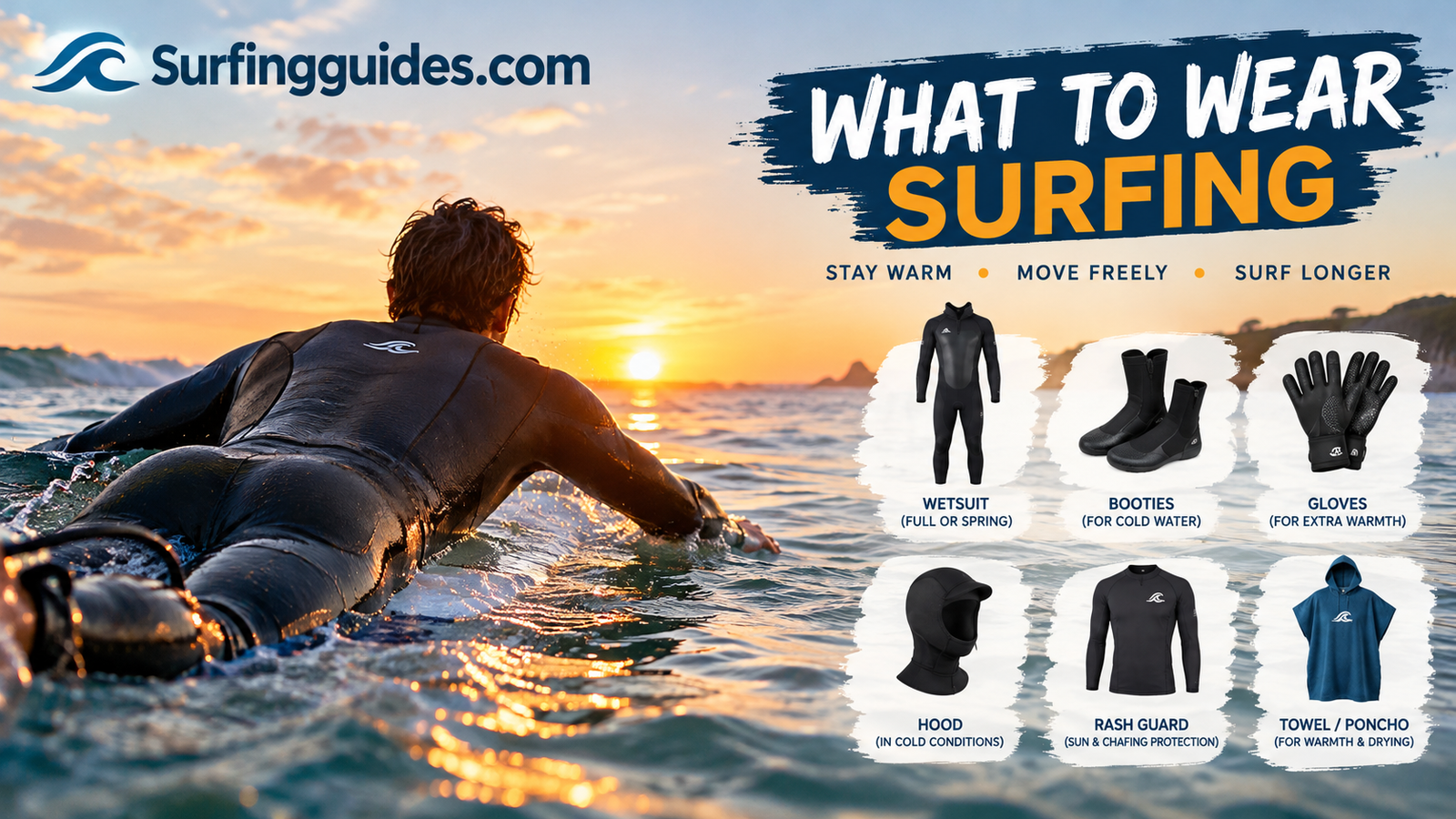
What to Wear Surfing: The Complete Outfit Guide for Every Water Temperature
From boardshorts and rash guards to thick winter wetsuits, here is exactly how to dress for comfort, safety and more time in the water.
Ask ten surfers what to wear surfing and you will get ten slightly different answers, and most of them will start with the same two words: it depends. It depends on how cold the water is, how strong the sun is, how long you plan to stay out, how much you move around, and honestly, how much you care about looking good while you flail through your first whitewater wave. The good news is that the decision is far simpler than it sounds once you understand a handful of principles.
Surf clothing has one job: to keep you comfortable enough that you can focus on the ocean instead of on your body. When you are cold, your muscles tighten, your paddling gets sloppy and your session ends early. When you are chafed, sunburned or tangled in loose fabric, you are distracted at exactly the moment a wave needs your full attention. The right outfit removes all of that friction.
In this guide we walk through every layer of a surf wardrobe, from the tropical basics to the hooded, gloved, booted winter kit. You will learn how to match gear to water temperature, what to put on underneath a wetsuit, how men, women and beginners can dress differently, and how to avoid the mistakes that waste money. Use the contents panel to jump to whatever you need.

The right outfit changes with the water, the weather and the wave.
1. Why What You Wear Surfing Matters More Than You Think
Surfing looks effortless from the beach, but it is one of the most physically demanding recreational sports there is. You paddle with your arms, balance on a moving surface, duck under waves, and spend long stretches sitting still in water that is almost always cooler than your body. Clothing is the buffer between all of that and your comfort.
There are four problems that surf clothing solves, and it helps to keep them in mind when you are shopping or packing your bag.
Heat loss
Water pulls heat from your body roughly twenty-five times faster than air of the same temperature. Even in what feels like mild water, a long session can leave you shivering. Wetsuits trap a thin layer of water against your skin that your body warms up, which works like a personal insulating jacket. Without that layer, hypothermia is a real risk in cold climates and an annoying session-ender in temperate ones.
Sun exposure
Surfers get hit from above and from below, because water reflects ultraviolet light back onto your face, neck and the backs of your legs. Hours spent lying prone on a board means your back, shoulders and the back of your neck take the brunt. Long-sleeve rash guards and rated sun-protective fabric are not a fashion statement; they are practical skin defense.
Friction and abrasion
Board wax, board texture and repeated paddling motions cause a painful rash across the chest, stomach and inner arms. It even has a name: board rash. A snug top or full suit creates a smooth barrier between your skin and the wax.
Freedom of movement
Baggy fabric catches water, drags in the current and can snag on the board or leash. Gear that fits correctly stays out of your way, lets your shoulders rotate freely and does not drift upward or ride down when you pop to your feet.
Once you accept those four jobs, picking an outfit becomes a simple matching exercise. Identify the water temperature, add sun protection if needed, and finish with the small extras that fit your local conditions.
Ready to build your surf wardrobe? Browse popular surf apparel and gear.
Shop Surf Apparel on Amazon2. Dressing by Water Temperature: The Only Chart You Need
Water temperature is the single biggest factor in what to wear surfing, so start here. The ranges below are a reliable starting point, although individual tolerance varies a lot. People who run cold, who surf for hours at a time, or who surf in windy conditions should usually go one step thicker than the chart suggests.
| Water Temperature | What to Wear | Typical Wetsuit Thickness |
|---|---|---|
| Above 75°F (24°C) | Boardshorts or bikini, optional rash guard | None |
| 68–75°F (20–24°C) | Rash guard, spring suit or thin shorty | 1–2 mm |
| 62–68°F (17–20°C) | Full wetsuit, no extras needed | 3/2 mm |
| 55–62°F (13–17°C) | Full wetsuit, booties in the cooler end | 3/2 to 4/3 mm |
| 48–55°F (9–13°C) | Thick full wetsuit, booties, gloves, hood | 4/3 to 5/4 mm |
| Below 48°F (9°C) | Heavy winter suit with hood, thick booties and mitts | 5/4 to 6/5 mm |
The thickness numbers you see on wetsuits, such as 4/3, refer to the neoprene panels in millimeters. The first number is the torso, where you need the most warmth to protect your core. The second number is the arms and legs, which are thinner so you can paddle freely.
Where to find the real number
Surf forecast websites and apps list sea surface temperature, but local surf shops and your own thermometer are often more accurate, especially near river mouths or in places where cold water upwells. If you are traveling, ask a local what they wear. Locals know their water better than any app, and a quick chat in a surf shop can save you from buying the wrong thickness.
Do not forget wind chill
Offshore wind, the kind that blows from land to sea and grooms waves nicely, makes you far colder than the water temperature implies once you pop your wet head out. In windy conditions, consider a thicker suit or an added hood even when the thermometer says you will be fine.
If your home break regularly drops into the low fifties or below, our guide to the best cold water wetsuit for surfing breaks down the suits that actually hold up when the ocean gets serious.
Find a wetsuit matched to your local water temperature.
Browse Surfing Wetsuits3. Wetsuits Explained: Types, Cuts and Entry Systems
A wetsuit is the backbone of any cool- or cold-water surf outfit, and it is also the most expensive piece you will buy. Understanding the main variations helps you choose a suit that fits your climate and your body without overspending.
Common wetsuit styles
| Style | Coverage | Best For |
|---|---|---|
| Short john / spring suit | Torso with short sleeves and legs | Warm water and breezy days |
| Long-arm spring suit | Full arms, short legs | Transitional seasons |
| Full wetsuit (steamer) | Full arms and legs | Most cool and cold conditions |
| Hooded full suit | Full body plus attached hood | Very cold water |
| Wetsuit top or jacket | Upper body only | Layering with boardshorts |
Entry systems
How you get into the suit shapes both flexibility and warmth. Back-zip suits are the classic design and are generally the most affordable, but the long zipper can let a little water flush through. Chest-zip suits, sometimes called zipperless or front-entry, use a smaller opening around the chest or shoulder, which seals better and stretches more across the back. They tend to feel warmer and more flexible, and they cost more. Zipperless designs add an extra stretchy neck opening and are popular among serious surfers.
Seams and construction
Seams are where cheap suits let you down. Flatlock stitching sits flat and is comfortable, but it lets water seep through, making it best for warm water. Glued and blind-stitched seams stop most water and suit colder conditions. Taped or liquid-sealed seams are the warmest and the most durable, and you will find them on premium winter suits.
Fit is everything
A wetsuit should feel snug, like a firm hug, with no air pockets around your lower back, armpits or knees. If you can pinch much loose material, the suit will flush with cold water and you will feel it immediately. At the same time, it should not restrict breathing or squeeze your shoulders when you reach overhead. Try the suit on and mimic a paddling motion, then a pop-up motion, before you commit.
Neoprene quality and lining
Not all neoprene is created equal. Budget suits use heavier, less elastic foam that feels stiff and absorbs more water, which makes the suit colder and heavier as the session goes on. Premium suits use lighter, more elastic foam, often made with limestone-based or plant-based rubber, and they are paired with soft thermal linings that trap warmth and dry in a fraction of the time. A suit with quick-drying lining feels dramatically better when you pull it on for a second session in the same day, so it is worth paying attention to when comparing models.
Exterior fabric matters too. Smooth-skin panels on the chest block wind and repel water, which helps in cold, breezy conditions, while jersey panels stretch more and feel comfortable against the skin. Many modern suits combine both for the best balance of warmth and mobility.
Pros of a quality wetsuit
- Lets you surf comfortably for longer
- Adds light buoyancy and impact protection
- Protects against sun, wax and reef scrapes
- Lasts years with proper care
Cons to keep in mind
- Upfront cost can be significant
- Hard to put on and take off when wet
- Fit varies a lot between brands
- Can feel hot on warm, calm days
If you are budgeting, we break down the real numbers in our guide to how much a wetsuit for surfing costs, including where it is smart to spend and where you can save.
Compare full wetsuits for men and women.
See Full Wetsuits4. Warm-Water Surf Wear: Boardshorts, Bikinis and One-Pieces
When the water is warm, the surf wardrobe gets wonderfully simple. The challenge is no longer insulation; it is staying secure, comfortable and protected while the waves toss you around.
Boardshorts
Boardshorts are the classic warm-water bottom for a reason. They are cut from quick-drying, four-way stretch fabric, designed to sit just above or around the knee so that the hem does not rub against the board. Look for a secure closure system, usually a Velcro fly plus a tie cord, because nothing ruins a wave like losing your shorts in a wipeout. Avoid cotton shorts at all costs. Cotton absorbs water, becomes heavy and chafes the inner thighs within minutes.
Fit matters more than most people realize. Shorts that are too long catch the water and drag; shorts that are too short can ride up and expose skin to wax. Choose a length that stops just above the kneecap and a waist that stays put without squeezing.
Bikinis and surf-specific two-pieces
An everyday bikini often will not survive a day of surfing. Strings come untied, the top slips when you duck under a wave, and the bottoms shift. Surf-specific bikinis solve this with thicker, adjustable straps, crossed or clasped backs, higher-cut tops and fuller-coverage bottoms. Many are designed with a snug stretch that stays in place even when a wave slams into you. If you love a bikini look, try on the top and jump up and down, then lean forward as if paddling, to test whether it stays put.
Surf one-pieces
For many surfers, a one-piece suit is the most secure option. It eliminates the risk of a top slipping or bottoms shifting, and the added coverage gives some sun and wax protection on your stomach and lower back. Long-sleeve or short-sleeve surf one-pieces blend a rash guard and swimsuit into a single piece, which is a particular favorite for beginners.
Swim trunks vs surf shorts
Regular swim trunks are lined with mesh, which can chafe over hours of paddling. Dedicated surf shorts skip the liner entirely, or use a very soft one, because the board and wax are not kind to seams and stitching. If you only own trunks, they will do for a short beginner lesson, but a real pair of boardshorts is a tiny upgrade with a big comfort payoff.
Grab boardshorts or a surf-ready swimsuit built to stay put.
Shop Boardshorts5. Rash Guards and Sun Protection: Your Everyday Surf Shirt
If there is one piece of clothing every surfer should own, it is a rash guard. It is cheap compared to a wetsuit, wildly versatile, and it solves several problems at once.
What a rash guard does
A rash guard is a snug-fitting shirt made from stretchy synthetic fabric, usually a blend of nylon or polyester with elastane. It dries quickly, resists chafing from wax, and provides a layer of protection from the sun. Many are rated with a UPF value, similar to a sunscreen’s SPF. A UPF 50 rating blocks roughly ninety-eight percent of ultraviolet rays that would reach your skin through the fabric.
Short sleeve vs long sleeve
Short-sleeve rash guards are great for warm conditions where you want some protection without extra heat. Long-sleeve versions are better for long sessions, strong sun and lighter wax rash. If your shoulders and forearms tend to burn, go long sleeve every time.
Loose fit vs compression fit
Compression-fit rash guards hug the body, which reduces drag and keeps the fabric from catching the wave. Loose-fit shirts feel breezier but can ride up and flap around. For paddling-heavy sessions, a close fit is almost always better. Make sure the hem is long enough that it does not ride up when you reach forward, and consider a version with a hem grip or a small stay-put strap for extra security.
Choosing fabric and color
Look for a blend with plenty of stretch and a tight weave, because stretch keeps the shirt moving with you and a tight weave blocks more light. Flatlock seams reduce friction against your skin, and a seamless underarm design prevents rubbing during long paddling sessions. Darker colors absorb more heat, while lighter colors reflect it, which can matter on a hot, windless day. Bright colors have another advantage: they make you easier to spot in the water, which is a quiet safety bonus on crowded or remote beaches.
Don’t forget the sunscreen
Don’t forget the sunscreen
A rash guard covers your torso and arms, but not your face, neck, ears, feet and the backs of your hands. Use a water-resistant, mineral-based sunscreen on every exposed patch, and reapply between sessions. Mineral formulas also tend to be kinder to reef ecosystems, a bonus if you surf near coral. Lip balm with SPF is an easy-to-forget essential, and a good pair of surf-ready sunglasses with a floating strap can cut glare while you wait for sets.
Hats and hoods for sun
Surf hats with chin straps are popular in tropical spots and for long sessions. They keep the sun off your face and the back of your neck, and many have a brim designed to stay put in wind. A hat is not for every break, but on a slow glassy day with a long wait between sets, it can be the difference between a comfortable session and a painful sunburn.
Protect your skin with a UPF-rated rash guard.
Shop Rash Guards6. What to Wear Under a Wetsuit
Here is a question that comes up constantly, especially for newcomers: what exactly goes under the wetsuit? The answer is short, but the details are worth knowing, because the wrong choice can make you colder, chafe your skin or leave you with a soggy, uncomfortable ride.
The simple answer
Most surfers wear a swimsuit, a bikini, boardshorts or a surf one-piece underneath. These dry quickly, add almost no bulk and let you change easily after the session. Some people prefer a thin rash guard or neoprene base layer under a thick suit, particularly when the water is very cold.
What to avoid
- Cotton underwear and shirts: cotton soaks up water, stays wet and pulls heat from your body.
- Padded or underwired items: they bunch under neoprene and rub painfully.
- Seamy undergarments: thick seams cause chafing as you paddle.
- Thick layers that bulk up your fit: a tight suit over bulky clothing feels restrictive and may not seal properly.
Options by preference
| Option | Benefit | Watch Out For |
|---|---|---|
| Swimsuit or bikini | Fast drying, easy to change | Strings and clasps may rub |
| Boardshorts | Comfort and coverage | Bulky hems under thin suits |
| Thin rash guard | Less chafing, easier on and off | Adds mild bulk in the arms |
| Thermal base layer | Extra warmth in cold water | Needs a snug suit to fit over it |
| Nothing (skin-contact) | Warmest and most flexible fit | Rubbing, and awkward changing in public |
Going without anything underneath is a common practice among experienced surfers because it offers the best fit and flexibility, but it is not for everyone, and a bit of coverage under your suit makes sense for modesty and chafe prevention. For a full breakdown of every option, including how to handle changing at the beach, read our guide to what to wear under a wetsuit for surfing.
An easy trick for getting in
Wet neoprene grips skin fiercely. A thin synthetic layer or a plastic bag over your feet and hands can help you slide through the cuffs. Slide the suit on slowly, working up from the ankles, and avoid pulling hard at the shoulders with your fingernails, because most neoprene tears are caused by nails.
Shop thermal base layers and surf swimwear to wear under your suit.
Shop Base Layers7. Booties, Gloves and Hoods: Cold-Water Extras
When the water falls into the fifties or lower, the wetsuit alone is not enough. Your extremities lose heat quickly, and once your hands and feet go numb, your session is basically over. Cold-water accessories let you stay in far longer and surf with real control.
Surf booties
Booties are thick neoprene socks with a rubber sole, and they come in two main shapes. Round-toe booties are the most common and work well for most surfers. Split-toe booties separate the big toe, which improves board feel and grip, but they are slightly less warm. Thickness ranges from 1.5 mm for cool water up to 7 mm for harsh winter conditions. A snug fit keeps water from flushing through; a loose pair turns into a bucket of cold water around your foot. Booties are also useful in warm water at rocky or reef breaks, where a sharp rock or sea urchin can ruin your day. For a closer look at the best options, see our guide to the best surfing booties.
Gloves and mitts
Neoprene gloves keep fingers warm, but they reduce dexterity. Five-finger gloves provide the best feel and are common for mild cold. Three-finger gloves and mittens, sometimes called lobster claws, trade finger independence for warmth, which is ideal in deep winter. Lined gloves with an inner layer of fleece-like fabric add comfort and speed up drying.
Hoods and caps
You lose a surprising amount of body heat through your head, and cold water on the ears can cause dizziness and long-term problems like surfer’s ear. A neoprene hood protects both. Some wetsuits come with an attached hood, while separate hoods let you adjust warmth and wear them only when needed. Tight, close-fitting hoods keep water out better, and a chin strap prevents the hood from riding up during duck dives.
Do you need all three?
No. Most surfers start with a good wetsuit, add booties first, then gloves, and finally a hood as water temperatures fall. Think of them as modular. In the mid-fifties, booties alone may be enough. In the low forties, you will want all of them, plus a thicker suit.
Keep your hands, feet and head warm in cold surf.
Shop Cold-Water Accessories8. Men’s and Women’s Surf Outfits: Fit, Cut and Style Differences
Surf clothing is not as gendered as a lot of sports gear, but body shape does affect fit, and brands design their cuts accordingly. Whatever you identify with, the aim is the same: a snug, secure outfit that does not restrict motion.
Typical men’s setups
- Warm water: boardshorts and either a short- or long-sleeve rash guard.
- Cool water: boardshorts under a spring suit or a 2 mm top and shorts.
- Cold water: a full wetsuit, usually 3/2 up to 5/4, with booties, gloves and a hood as needed.
Men’s wetsuits are generally cut with broader shoulders and a straighter torso, and they sometimes run longer in the arms and legs. If you are tall or lean, look for brands that offer tall or short sizing, because an ill-fitting suit is a leading cause of cold, flushed sessions.
Typical women’s setups
- Warm water: a surf bikini, a one-piece or a fitted rash guard with surf shorts or leggings.
- Cool water: a spring suit, a long-sleeve rash guard with surf leggings or a thin full suit.
- Cold water: a full wetsuit with a women’s cut, plus booties, gloves and hood.
Women’s wetsuits have different proportions through the chest, waist, hips and torso length, so a suit built for men often leaves gaps around the bust and gaping at the lower back. Women’s cuts typically use softer, stretchier panels and a tailored torso, and some have a lower neckline or adjustable neck closure for comfort. Some women also prefer a suit with a drop-seat or a flexible zipper arrangement for easier bathroom breaks on long days.
Surf leggings and shorts
Surf leggings are a popular warm-water option, particularly for women, but they are used by plenty of men too. They protect the knees and thighs from wax and sun, and they stay secure through wipeouts. Longer rash-guard shorts and neoprene shorts cover the inner thigh, the spot that suffers most from wax rash.
Kids and youth
Children get cold faster than adults because of their smaller body mass. Dress them one step warmer than you would dress yourself, and choose suits with flexible, easy-on construction. A snug rash guard with UPF protection is excellent for kids in warm water, and a thick wetsuit with a hood makes cold-water lessons far more enjoyable.
Find surf gear sized and cut for your body.
Shop Surf Wear for Women9. What Beginners Should Wear for the First Few Sessions
Beginners spend more time in the water than experienced surfers, and a lot of that time is spent paddling, falling and getting rolled by whitewater. That makes comfort and protection even more important at the start, and it means a few specific choices matter.
Go snug, not baggy
New surfers often arrive in loose gym shorts and a cotton T-shirt. Within ten minutes the fabric is soaked, heavy and chafing. Opt for a snug rash guard and secure boardshorts or surf leggings, even if you feel a little self-conscious. Comfort will win out over style by the second wave.
Rent first, buy later
Most surf schools and rental shops provide wetsuits, boards, leashes and sometimes rash guards. Renting for your first sessions lets you test thickness and fit before you spend real money. If you decide to buy, you will know exactly what you like. If you are still weighing whether surfing is right for you, our guide on how to start surfing covers your first steps from the ground up.
Prioritize protection
Beginners tend to wipe out more, which means more contact with the board and the seabed. A full-coverage suit or leggings protect your skin from scrapes. Booties help at rocky or reef-fringed beaches, and a surf helmet may be wise at a crowded or shallow break.
Plan for the walk and the wait
Your outfit does not end at the waterline. Beginners often forget how much time they spend standing on the sand before and after a session, particularly when the wind is up. A warm hoodie, a pair of easy slip-on shoes and a thick towel or changing poncho make the transition much more pleasant. Bring a warm drink for cold mornings and a bottle of fresh water to rinse sand and salt from your face and feet. Being comfortable out of the water is part of what keeps people coming back to the sport.
It also helps to wear your wetsuit or rash guard to the beach if the weather allows, rather than struggling into a damp suit in the parking lot. Putting your gear on at home or in the car saves precious time and keeps you warm while you walk to the break.
If you are still wondering whether you will cope with the physical demands, take a look at the honest answers about the learning curve in the related reading below. Knowing what to expect makes it easier to choose gear you will actually use.
Keep it simple
Keep it simple
You do not need a perfect kit on day one. A good rash guard, a pair of boardshorts or a swimsuit, plus a rented wetsuit if the water is cool, covers nearly everything you will face. Spend your first money on the sun protection and fit, and let experience guide the rest.
Beginner outfit wins
- Snug rash guard for chafe and sun
- Secure bottoms with a tie closure
- Rented wetsuit in the right thickness
- Water-resistant mineral sunscreen
Beginner outfit mistakes
- Cotton T-shirts and gym shorts
- Bikini strings that slip
- Buying a cheap, poor-fitting suit
- Skipping sun protection
Put together an affordable starter kit.
Shop Beginner Surf Gear10. Accessories and Extras That Complete Your Surf Outfit
Clothing is only part of the equation. A handful of accessories make your session safer, more comfortable and a lot more fun. You do not need all of them from day one, but it helps to know what exists.
Leash and board gear
A leash is not technically clothing, but it clips to your ankle and is part of your essential kit. A good leash keeps your board close and prevents it from becoming a hazard to others. Wax or a traction pad keeps your feet from slipping, and a board bag or sock protects the board while you travel. If you are putting a full setup together, our rundown of what you need for surfing covers every item beyond clothing.
Ear protection
Surfer’s ear, a bony growth in the ear canal, develops after repeated exposure to cold wind and water. Soft silicone ear plugs designed for surfing let you hear while keeping water out. They are inexpensive, comfortable and worth considering if you surf cold water often.
Sunglasses and nose protection
Floating sport sunglasses with a strap cut glare while you wait for waves. A zinc-based nose and cheek stick adds a layer of protection to your most exposed features and stays in place through wipeouts.
Changing gear
A hooded towel poncho, a changing mat and a waterproof bucket or bag turn a messy beach changeover into an easy routine. A bucket of fresh water at your car lets you rinse sand from your feet, and a dry bag keeps your clothes from soaking everything else you own.
Capturing the moment
If you want to film your waves, a small waterproof action camera on a board mount or a chest harness is a fun upgrade. Make sure it is secured firmly, since a loose camera can become a hazard in a wipeout.
Helmets and impact vests
At shallow reef breaks, heavy beach breaks or big-wave spots, soft or hard-shell surf helmets and impact vests add real protection. They are not necessary for everyone, but they have a growing following among surfers who value safety.
Round out your kit with leashes, ear plugs and sun gear.
Shop Surf Accessories11. Layering by Season and Conditions
Even if you surf in the same place all year, your outfit will change with the seasons. Water temperature often lags behind air temperature by a month or two, so the coldest water frequently arrives in late winter or early spring, not mid-winter. Plan around that lag rather than the calendar.
Summer
In most temperate regions, summer means thin suits or none at all. Boardshorts and a rash guard are standard in warm places, while a spring suit or a 2 mm top covers cooler summer coastlines. Early morning sessions can be cold even in summer, so bring a light extra layer.
Autumn
Autumn is the sweet spot for many surfers, with steady swell and still-warm water. It is also when you need to think about transition gear. A 3/2 full suit is the workhorse of this season, and a hooded top or lightweight booties can extend your sessions as the water begins to cool.
Winter
Winter brings the biggest swells and the coldest water in many places. Thick suits, booties, gloves and hoods make cold-water surfing possible, and good preparation includes warm clothes for after, a thermos of something hot and a towel or robe for changing. A thick parka and a heated car seat are underrated luxuries.
Spring
Spring is often unpredictable. The air may be warm while the water is still brutally cold. Check the water temperature, not just the weather, and be ready to step down in thickness over several weeks.
Conditions change the plan too
Wind, rain, tide and swell all affect how you feel in the water. A cold wind can make mild water feel brutal. A long wait for waves means more time sitting still and losing heat. Shallow, low-tide breaks may call for extra foot or head protection. If you are curious about how tide shapes your session, take a look at our guide to what tide is best for surfing, because conditions like these can influence what you decide to wear.
| Season | Common Outfit | Extras To Consider |
|---|---|---|
| Summer | Boardshorts or swimsuit, rash guard | Sun hat, sunscreen |
| Autumn | 3/2 full wetsuit or spring suit | Light booties |
| Winter | 4/3 to 5/4 full wetsuit | Booties, gloves, hood |
| Spring | 3/2 to 4/3 full wetsuit | Adjustable accessories |
Stock up on seasonal layers for every condition.
Shop Seasonal Wetsuits12. Care, Budget and Common Mistakes to Avoid
Surf gear is an investment, and a little care will stretch its life dramatically. Equally, a few common mistakes cost surfers money and comfort year after year.
How to care for your gear
- Rinse every time: fresh water removes salt, sand and sunscreen that break down neoprene.
- Hang inside out, in the shade: direct sun degrades neoprene, and a wide hanger prevents shoulder creases.
- Never use a dryer or hot water: heat damages glue and rubber.
- Wash occasionally with a wetsuit-safe cleaner: this controls odor and bacteria.
- Store flat or hung loosely: avoid folding along the same crease for months.
Budgeting wisely
Spend the most on the wetsuit and the fit, because that is where comfort lives. Rash guards, boardshorts and leashes can be modest purchases, while booties and gloves are worth good quality if you surf cold water regularly. Look for last-season models at a discount, check surf shop sales and consider used suits only if you can try them on and inspect seams and zippers.
When to replace your suit
Even a well-kept wetsuit does not last forever. Signs it is time to move on include thinning or cracked neoprene, seams that leak, a stretched-out neck or cuffs, and a lingering odor that no cleaner removes. If you find yourself feeling colder than you used to in the same conditions, the foam has probably compressed and lost its insulating ability. Small tears can often be repaired with wetsuit glue or liquid neoprene, but widespread wear is a sign that a new suit will pay off in comfort.
Mistakes to avoid
Mistakes to avoid
- Buying the wrong thickness: too thin is cold, too thick is hot and restrictive.
- Choosing style over fit: a beautiful suit that does not seal is no bargain.
- Wearing cotton: it is cold, heavy and chafing the moment it gets wet.
- Skipping sun protection: a surf tan is a sunburn in disguise.
- Neglecting aftercare: salt and sunshine age neoprene fast.
- Ignoring local knowledge: locals know what the water is really like.
Avoid these and your gear will pay you back in comfortable sessions for years.
Keep your suit fresh with wetsuit shampoo and a proper hanger.
Shop Wetsuit CareFrequently Asked Questions About What to Wear Surfing
What should a beginner wear for surfing?
A snug rash guard and secure boardshorts or surf leggings are a great start in warm water. In cool water, rent a properly fitted wetsuit from your surf school. Avoid cotton and loose clothing.
Do you need a wetsuit to surf?
Not always. In water above roughly seventy-five degrees Fahrenheit, many surfers go with just boardshorts or a swimsuit and a rash guard. In cooler water, a wetsuit becomes essential for staying warm and safe.
What do girls wear when surfing?
Women commonly wear surf bikinis with secure straps, surf one-pieces, or a rash guard with surf shorts or leggings. In cooler water, a women’s-cut wetsuit offers a better fit.
What should guys wear surfing?
Boardshorts with a rash guard are the standard warm-water outfit. In cooler conditions, men typically wear a spring suit or full wetsuit sized for their body.
Can I surf in a regular swimsuit?
You can, but it may not stay in place. Everyday swimwear can shift or untie in waves. Surf-specific designs with secure closures are much more reliable.
What do you wear under a wetsuit?
Most surfers wear a swimsuit, boardshorts or a thin synthetic base layer. Avoid cotton, which holds water and chills you. Some experienced surfers wear nothing underneath for the best fit.
What is a rash guard and do I need one?
A rash guard is a snug, quick-drying shirt that protects against sun, wax rash and light abrasion. It is not mandatory, but it is one of the most useful and affordable pieces of surf clothing.
What thickness wetsuit do I need?
It depends on water temperature. A 3/2 mm suit covers most mild to cool conditions, a 4/3 mm suit suits colder water, and 5/4 mm or thicker is for winter. Add booties, gloves and a hood as it gets colder.
Do I need to wear booties when surfing?
Booties are recommended in cold water to keep your feet warm and are helpful at rocky or reef breaks for protection. In warm, sandy-bottom locations, most surfers go barefoot.
How should surf clothing fit?
Snug but not restrictive. A wetsuit should have no big air pockets, and a rash guard should stay put without riding up. You should be able to paddle and pop up freely.
Can I wear leggings or shorts for surfing?
Yes, as long as they are made from quick-drying stretch fabric. Surf leggings and rash-guard shorts protect your legs from wax and sun, but cotton leggings and gym shorts are poor choices.
How do I protect my skin while surfing?
Wear a UPF-rated rash guard, apply water-resistant mineral sunscreen to exposed skin, and consider a hat or sunglasses with a strap. Reapply between sessions, and rinse off after surfing.
Final Thoughts: Dress for the Water, Enjoy the Waves
Knowing what to wear surfing is mostly about matching your gear to the water, protecting your skin and choosing a fit that lets you move. In warm water, boardshorts or a secure swimsuit with a rash guard is often all you need. As the temperature drops, a wetsuit becomes your best friend, and booties, gloves and a hood extend your season into the coldest months.
Start with the essentials, rent or borrow while you learn, and invest in a good fit when you are sure of your needs. Take care of your gear, listen to local advice, and do not be afraid to adjust as conditions change. The right outfit will keep you warm, protected and focused on the best part of surfing: catching waves.
Ready to gear up for your next session?
Shop Surf Gear on Amazon