
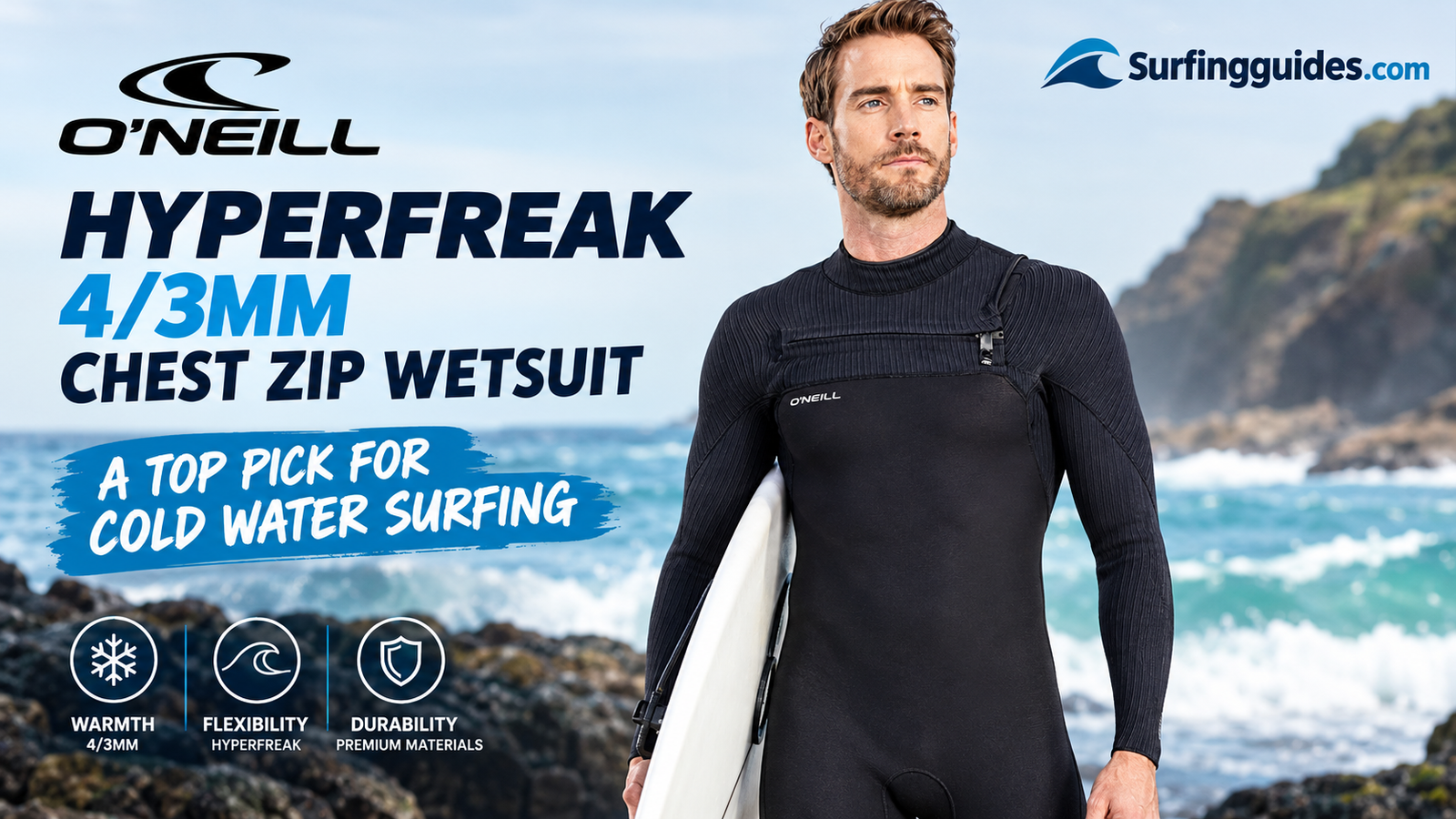
Best Cold Water Wetsuit for Surfing: Stay Warm, Stay in the Lineup Longer
Ten wetsuits tested against the realities of cold, grey, wind-chilled surf, from fast-drying premium suits to budget-friendly thick neoprene and one extreme-cold dive suit.
There is a particular kind of cold that every cold water surfer knows. It is not the sharp shock of the first duck dive, which fades within a minute. It is the slow, creeping kind that settles into your hands and the base of your spine about forty minutes into a session, when the swell is finally lining up and your body starts quietly bargaining with you to go in. The wetsuit you wear is the single biggest factor in how long that bargaining takes to begin.
This guide exists to help you pick the right suit for that situation. We have gathered ten wetsuits that cover the realistic range of cold water surfing, from the fast-drying, flexible premium suits that serious winter surfers rely on, to the thick and affordable options that make cold water accessible to beginners, and one very thick suit that is closer to a dive suit than a surf suit. Each one gets an honest look at who it suits, where it shines, and where it asks you to compromise.
If you are brand new to the sport and still sorting out the basics, our guide on what you need for surfing is a helpful companion, and if you are weighing a first purchase against your budget, how much a wetsuit for surfing costs breaks down what to expect at each price level.

Browse the current range of cold water surf wetsuits on Amazon.
Shop Cold Water Wetsuits1. Why Cold Water Changes Everything About Wetsuit Choice
Surfing in warm water is forgiving. If a boardshort or a thin spring suit does not quite fit right, you simply shrug and paddle out. In cold water, small mistakes become big problems. A suit that is a little loose lets a steady flow of fresh cold water through the neck and back. A suit that is a little tight restricts your shoulders and tires you out before the set arrives. A suit with thin, poorly sealed seams leaks along every stitch line. The margin for error shrinks as the water temperature drops, which is exactly why this category deserves more attention than any other piece of surf gear.
It helps to understand what your wetsuit is actually doing. Contrary to a common belief, a wetsuit does not keep you dry. It lets a thin layer of water in against your skin, your body warms that layer, and the neoprene traps it, acting as insulation. The warmth you feel comes from your own body heat held in place. This means the two enemies of a cold water wetsuit are water flushing in and out (taking your warmed layer with it) and wind chill on the outside of the suit, which steals heat through evaporation and contact with the neoprene.
That explains why the features marketed on cold water suits matter so much: sealed seams that stop flushing, thermal linings that dry quickly and add insulation, snug neck closures, and thicker neoprene in the torso where your vital organs live. Every suit in this list handles those jobs a little differently, and understanding the trade-offs will keep you from overspending on features you do not need or underspending on the ones you do.
The real cost of being cold
Cold is not only a comfort issue. As your core temperature drops, your coordination, grip strength and decision making all suffer. Cold surfers take worse waves, misjudge sets, and tire faster. In very cold water, hands and feet go numb well before you realize how chilled the rest of you has become. A good wetsuit extends your safe, productive time in the water, and a wetsuit that fits and insulates properly means you actually progress, because you are in the water longer and in a clearer frame of mind.
What this guide is built around
We focused on suits that are widely available, widely discussed among surfers, and that represent distinct approaches to staying warm. Some are premium and flexible. Some are thick and affordable. One is an extreme-cold dive-style suit that we include for completeness, because plenty of people searching for the warmest option end up considering it. Our job in the sections below is to help you work out which approach matches the water you actually surf.
One honest caveat before we go further: we describe each suit in general terms based on its published design and category, and we do not quote exact specifications, because manufacturers update materials and features between product years. Always check the listing for the current details of the model you are buying, particularly sizing charts and included features.
Compare cold water surf wetsuits and read current buyer reviews.
See Wetsuits on Amazon2. Water Temperature and Thickness: A Practical Guide
Wetsuit thickness is written as two or three numbers separated by slashes, such as 4/3mm. The first number is the thickness of the neoprene in the torso, where warmth matters most. The second is the thickness in the arms and legs, where you need freedom of movement. A 5/4/3/2mm suit like the Hevto goes one step further, using several thicknesses across different zones, often with the thickest panels over the core and the thinnest over the shoulders and arms.
Thickness is the blunt instrument of warmth, but it is a good place to start. The chart below is a general guide only. Individual cold tolerance varies enormously, wind and air temperature matter as much as water temperature, and how long you plan to stay in the water changes everything. Treat these ranges as a starting point and adjust based on how you personally handle the cold.
| Approx. Water Temp | Typical Suit | Extras Often Needed |
|---|---|---|
| Around 58 to 65°F (14 to 18°C) | 3/2mm full suit such as the O’Neill Hyperfreak 3/2+ | Booties optional on windy days |
| Around 52 to 58°F (11 to 14°C) | 4/3mm full suit | Booties; light gloves for sensitive hands |
| Around 45 to 52°F (7 to 11°C) | 4/3mm premium or 5/4mm suit | Booties, gloves, hood in windy conditions |
| Below about 45°F (7°C) | 5/4/3mm or thicker; 5mm class suits | Hooded suit or separate hood, thick booties and gloves |
| Near freezing, very long sessions | Thick dive-style suits like the Mares M-Flex 7mm, or drysuit territory | Everything; limited paddling flexibility |
You will notice the O’Neill Hyperfreak 3/2+ sits in the cool water band, around 58 to 65°F. It is not a true cold water suit, but it earns its place in this guide because many surfers live in regions where the water is cool rather than frigid for much of the year, and a high-quality 3/2 suit with a better lining does an impressive job right at the edge of that range.
Thicker is not automatically better
It is tempting to buy the thickest suit available and call it done. The trade-off is flexibility and fatigue. A 5mm suit restricts your shoulders when paddling, and many surfers find that after an hour of paddling in stiff neoprene they are more tired, and therefore colder in a different way, than they would have been in a thinner but more elastic suit. This is one of the main reasons premium 4/3mm suits cost more than thick budget suits: the neoprene used in the pricier models stretches more easily while holding the same insulation, so you can wear thinner and still stay comfortable.
Think in seasons, not single days
If you surf all year, you probably need more than one wetsuit. A common approach is a 3/2mm for the shoulder months and a 4/3mm or thicker for winter. If you can only buy one, buy for the coldest consistent conditions you will surf, and use accessories such as a hood or booties to fine-tune. It is far easier to add layers underneath on a milder day (see our guide on what to wear under a wetsuit for surfing) than to endure a suit that is simply too thin for the season.
Wind and air temperature
Many surfers are caught out because they only check the water temperature. A 54°F ocean with an air temperature of 40°F and a stiff offshore wind will feel dramatically colder than the same water on a warm, still day. Wind chill hits the surface of your suit and your wet hair, and every time you step out or sit on your board between waves, evaporation works against you. In these conditions, a smooth-skin or water-repellent outer surface, a hood and a good lining can be worth more than an extra millimeter of rubber.
Find the right thickness for your local water temperature.
Shop 4/3mm Wetsuits3. What Actually Makes a Wetsuit Warm
Two wetsuits can both be labelled 4/3mm and feel completely different in the water. The thickness number only tells part of the story. Warmth is the combined result of the neoprene itself, the lining, the seam construction, the closure system and the fit. Understanding each of these will make you a much sharper shopper, and it explains why a premium suit and a budget suit of the same thickness can differ so much in how they feel on a bitter morning.
The neoprene
Neoprene is a closed-cell foam filled with tiny gas pockets, and those pockets are what trap heat. Traditional neoprene is made from petroleum-based chloroprene, though many brands now offer limestone-based or plant-derived alternatives in their higher-end ranges. In practical terms, what matters to you is how stretchy the foam is, how much it weighs and how well it resists compression and water absorption over time. Lighter, stretchier foams, which are common in suits like the O’Neill Hyperfreak, the Xcel Drylock and the Rip Curl E-Bomb, allow you to paddle freely without losing insulation. Heavier, stiffer foams, common on more affordable suits, tend to feel more restrictive but are often thicker for the price.
The lining
Inside the suit, a brushed or fleece-style thermal lining does two jobs. It adds a layer of insulation against your skin and it dries far faster than bare rubber. That second benefit matters more than most beginners realize. Getting into a cold, damp suit for the second session of the day is miserable, and a quick-drying lining makes it much more bearable. Premium cold water suits often use these linings through the torso, back and sometimes the legs, and they are one of the biggest comfort differences you will feel between price tiers.
The seams
A wetsuit seam is a potential leak. The cheapest suits use flatlock stitching, where panels are laid edge to edge and stitched through, leaving tiny holes that let water in. These are fine for warm water but poor for cold. Better cold water suits glue and blind-stitch their seams, meaning the stitching never pierces the full thickness of the neoprene, and then add liquid or tape sealing on the inside and sometimes the outside. The result is a much more watertight suit, and your warmed layer of water stays where it belongs. When you see terms like glued and blind-stitched, taped, or liquid-sealed in a product description, that is the manufacturer telling you the suit is built for colder conditions.
The neck and wrist seals
Water enters a wetsuit mostly through its openings: the neck, wrists, ankles and the zipper. Cold water suits tackle this with snugger neck closures, internal flaps and, on better models, interior liners that hug the neck and chest. Chest zip designs, which we explain in the next section, reduce the opening to a narrow slot, which dramatically cuts flushing. Wrist and ankle cuffs are usually tapered and sometimes sealed, but the real protection for hands and feet comes from the accessories we discuss later.
Exterior skin and wind protection
The outside of the suit matters too. A smooth, water-repellent exterior sheds water and blocks wind chill better than a standard jersey exterior, which tends to hold water and cool you through evaporation. Some premium suits use smooth skin panels across the chest and back for exactly this reason. They are slightly more delicate than jersey and can tear if you snag them, but in a cold, windy lineup they make a noticeable difference.
Panel layout and flexibility
Finally, how the suit is cut matters. Better suits use fewer seams on the torso and clever panel placement so that the stretchiest neoprene sits where you need it most, across the shoulders and armpits. This reduces paddling fatigue and often means the suit lasts longer, because the material is not being pulled to its limit with every stroke. When you try on a suit, raise your arms above your head and mimic a paddling motion. If the suit pulls hard across the back of your shoulders, it is either the wrong size or the wrong cut for you.
All of this adds up. A thick, stiff suit with flatlock seams and no lining may technically carry the same thickness number as a thinner premium suit, yet feel colder in practice. When you compare the suits in this guide, keep these construction details in mind, because they explain most of the price differences you will see.
Look for glued, blind-stitched and sealed seams when you shop.
Shop Sealed-Seam Wetsuits4. Chest Zip vs Back Zip vs Zipperless: Which Entry Style Is Best?
If there is one design choice that divides surfers, it is the zipper. Where the suit opens, and how it closes, affects warmth, flexibility, ease of getting in and out, and even how long the suit lasts. Three styles dominate the market, and the suits in our list include examples of the first two.
Back zip
The traditional back zip, as found on the O’Neill Epic 4/3mm, runs down the center of your back with a long opening. It is the easiest suit to get into and out of, which is a genuine advantage when you are cold, tired or wearing a suit that is slightly snug. Back zip suits are usually less expensive to build, so they are the standard on value and beginner models. The trade-off is that a long zipper opening is a long path for water. Good back zip suits address this with an internal flap or water barrier behind the zipper, but the design is still more prone to flushing than a chest zip, and the zipper along your spine can sometimes feel like a cold stripe when water finds its way through.
Chest zip
The chest zip, which you will find on the O’Neill Hyperfreak 4/3mm and which is the format favoured by many serious cold water surfers, uses a short diagonal or horizontal opening across the upper chest or shoulder. Because the back panel is completely uninterrupted, there is less leakage, more stretch across the shoulders and a warmer feel overall. The neck closure on these suits is often adjustable, letting you cinch the collar snug against the cold. The downside is that getting into a chest zip suit takes some technique and patience, particularly if your shoulders are tight. Once you learn the method, it becomes second nature, but the first few attempts can feel like a wrestling match.
Zipperless
Zipperless suits remove the zipper altogether, relying on an elastic neck opening and ultra-stretchy neoprene. They are typically the warmest and most flexible in a given thickness, and also the most expensive. They are not represented in this list, so we mention them for completeness only. If you fall in love with cold water surfing and start looking for the ultimate upgrade, a zipperless suit is the next step.
| Entry Style | Warmth | Ease of Entry | Flexibility | Typical Price Tier |
|---|---|---|---|---|
| Back zip | Good | Easy | Good | Value to mid-range |
| Chest zip | Very good | Takes practice | Very good | Mid-range to premium |
| Zipperless | Excellent | Hardest | Excellent | Premium |
How to choose
If you are a beginner or if you have limited shoulder mobility, a back zip suit is the practical choice. It will get you in the water and keep you reasonably warm, and you will not dread changing in a freezing car park. If you surf regularly through winter, and you are comfortable with a bit of a learning curve, a chest zip is worth the extra cost and effort. The difference in flush resistance alone becomes obvious the first time you duck dive in genuinely cold water.
Whichever you choose, be gentle with the zipper and the neck seal. Never yank the zipper if it catches, always close it fully before you paddle out and rinse it with fresh water after every session. A zipper that is looked after will last for years, while one that is forced and left caked in salt will fail early.
Compare chest zip and back zip wetsuits side by side.
Shop Chest Zip Wetsuits5. Fit, Sizing and the Flush Problem
You can buy the best wetsuit in the world and still be cold if it does not fit. Fit is the quiet hero of wetsuit performance, and it is the area where most online buyers make mistakes. A cold water suit should feel snug everywhere without squeezing anywhere. Think of it as a firm hug, not a vice.
What a good fit feels like
A wetsuit should sit flat against your body with no obvious wrinkles at the knees, armpits or lower back. There should be no large pockets of air or loose fabric at the chest or the small of the back, because those spaces fill with cold water. At the same time, you should be able to take a full breath, raise your arms above your head and sit in a deep squat without feeling that the suit is fighting you. Dry-fit the suit at home before you ever take it near the water, because some retailers will not accept a return once it has been used.
Common fit problems
- Gaps at the neck: A loose collar is the single biggest source of flushing. If water pours down your chest when you duck dive, the neck is too big or the suit is the wrong cut for your build.
- Baggy lower back: This usually means the torso length is too long. A suit with a bit too much torso length will bunch and pool water in the small of the back.
- Tight shoulders: If you feel strain across the shoulder blades when you reach forward, the suit is too small or the neoprene is too stiff for your frame.
- Short in the crotch: A suit that pulls up uncomfortably at the groin is either too small or the wrong length for your torso.
Sizing tips for online buying
Different brands cut their suits differently. Premium surf brands such as O’Neill, Rip Curl, Xcel and Billabong tend to cut for athletic surfers and run close to body shape, while budget brands like Hevto, Owntop and Aunua often use more general sizing that can be baggier in some places and tighter in others. Always measure your height, weight, chest, waist and inseam, and compare them against the specific size chart on the product page rather than relying on your usual clothing size. If you fall between sizes, read recent reviews to see whether people recommend sizing up or down for that particular suit. For cold water, many surfers prefer the smaller of two options, since neoprene stretches slightly with use, but never size down so far that the suit restricts your breathing or paddling.
Women’s and youth suits
Women’s wetsuits are cut differently in the chest, hip and torso length, and surfers with those proportions often find that a women’s cut simply fits better than a unisex or men’s suit. Likewise, youth suits are designed for children who tend to have a different torso to leg ratio. If you are buying for a child, choose a youth suit rather than a small adult, and expect to replace it often as they grow. Several of the brands in this guide sell women’s and youth variants of their popular suits, so check the product pages for the version that suits you.
The fit test in the water
Once you are in the water, a good fit shows itself quickly. After the first duck dive, the suit should feel as though it has settled around you. A brief rush of cold at the neck is normal, but it should warm within a minute or so. If you feel a steady stream of cold water pouring through during every paddle or every dive, the suit is flushing and will not keep you warm for long. In that case, contact the retailer about an exchange, because the right size could transform your comfort level.
Always check the size chart, then find your best-fitting suit.
Find Your Size on Amazon6. Premium Picks: O’Neill Hyperfreak 4/3mm, Xcel Drylock 4/3mm and Rip Curl E-Bomb 4/3mm
These three suits represent the sharp end of cold water surfing, the models that serious winter surfers talk about on beach car parks and in surf forums. They share a common philosophy: use lightweight, highly elastic neoprene so you can wear the thickness you need for the cold without paying for it in paddling fatigue. All three are 4/3mm suits intended for genuinely cold water, and all three cost more than the value and budget options that follow. Whether that extra cost is worth it depends on how often you surf and how much you value comfort, durability and flexibility.

O’Neill Hyperfreak 4/3mm Chest Zip
Best for: committed cold water surfers who want maximum flexibility
The Hyperfreak is O’Neill’s performance-focused line, and the chest zip 4/3mm is the version most cold water surfers are looking for. Its reputation rests on how light and elastic it feels once you are in the water. Paddling in a suit like this feels closer to wearing a heavy rash vest than a thick rubber suit, and that effect is what you are paying for. The chest zip design keeps the back panel free of openings, so you get a warm, continuous feel along your spine.
Check Price on AmazonPros
- Highly flexible, low-fatigue paddling feel
- Chest zip reduces flushing and keeps the back warm
- Built with cold water in mind
- Respected, widely reviewed model line
Cons
- Premium price compared to value suits
- Chest zip entry takes practice
- Lighter neoprene needs careful handling to avoid tears
If you want a suit that disappears on your body, the Hyperfreak is where you should start. The experience is most noticeable on long paddle outs and in sessions where you are catching a lot of waves, because the shoulders stay relaxed and your arms keep working long after a stiffer suit would have tired you out. It is also a good investment if you surf multiple times a week in winter, since the cost per session drops quickly when you wear the suit regularly.
The one caution is care. Premium, lightweight neoprene rewards gentle handling. Pull the suit on by the thick parts, avoid dragging fingernails across the surface and never hang it from the shoulders on a thin hanger, which stretches the neoprene over time. We cover the full care routine in section 12.

Xcel Drylock 4/3mm
Best for: surfers who want a watertight, warm suit with a good lining
Xcel has long been associated with cold water surfing, and the Drylock design speaks directly to the problem we described earlier: water flushing in at the neck and openings. The pitch of the Drylock approach is a secure, sealed feel that keeps your warmed layer of water in place. If your biggest complaint with previous suits has been that cold water seems to pour in every time you duck dive, a suit built around sealing deserves a close look.
Check Price on AmazonPros
- Designed around reducing water entry
- Strong reputation in cold climates
- Warm, comfortable thermal lining
- Durable construction for regular use
Cons
- Premium price
- Snug sealing can feel restrictive for the first few sessions
- Sizing may take a little care to get right
Where the Drylock tends to appeal is in the real-world details. A secure neck seal and a well-built closure mean fewer cold shocks and a steadier body temperature across a long session. Surfers who spend a lot of time sitting on their boards waiting for sets, such as those at point breaks or reef breaks with long gaps between waves, often care more about heat retention than about maximum stretch, and that is where a sealed design pays off.

Rip Curl E-Bomb 4/3mm
Best for: surfers who want a proven all-rounder from a major brand
The E-Bomb has built a loyal following over many seasons, largely on the strength of its stretch and its warm feel for the thickness. Rip Curl has a long history in cold water surfing, and the E-Bomb sits near the top of its range. It is a popular choice for surfers who want something dependable, comfortable and well-regarded without needing to spend time deciphering technical jargon.
Check Price on AmazonPros
- Excellent stretch for its warmth
- Strong brand support and sizing range
- Comfortable lining and good seam construction
- A frequent pick among regular winter surfers
Cons
- Premium price tier
- Not the lowest-cost route to a 4/3mm suit
- Cut suits some builds better than others, so check the size chart
How to choose between these three
Honestly, you cannot go badly wrong with any of them. If paddling comfort is your top priority, the Hyperfreak is the standout. If your priority is a watertight, secure feel, the Drylock is purpose-built for it. If you want a reliable all-rounder from a name that is easy to find sizing information on, the E-Bomb is a safe bet. The best advice we can give is to read recent buyer reviews for the size you intend to buy, and to choose the suit whose cut matches your build as closely as possible. A well-fitting suit in a slightly less glamorous line will beat a poorly fitting flagship every time.
Also think about how you will use your suit over time. If you are heading into your first full winter of cold water surfing, a premium suit is a significant but sensible investment, particularly when you consider that you will be wearing it on most sessions. If you surf cold water only a handful of times per year, the value suits in the next section might be a better fit for your budget.
See current offers on premium 4/3mm cold water suits.
Shop Premium 4/3mm Suits7. Value Picks: O’Neill Epic 4/3mm Back Zip and Billabong Absolute 4/3mm
Not everyone needs, or wants, to spend premium money on a wetsuit. The two suits in this section are 4/3mm options from major surf brands that aim for a sensible balance of price, warmth and durability. They will not match the featherweight feel of the very best suits in section 6, but they bring serious cold water capability at a friendlier price, and they come from brands that stand behind their sizing and quality.
O’Neill Epic 4/3mm Back Zip
Best for: beginners and regular surfers who want a reliable, affordable cold water suit
The Epic is O’Neill’s accessible line, and the 4/3mm back zip version is one of the most approachable ways into proper cold water surfing. The back zip makes it easy to get on and off, which counts for a lot when you are changing in a cold car park or a chilly beach car park. It is a straightforward suit that does the job it is designed for without fuss.
Check Price on AmazonPros
- Easy back zip entry
- Reputable brand with good sizing information
- Value-oriented without feeling flimsy
- Good first cold water suit
Cons
- Less stretch than premium lines
- Back zip can allow more flushing than a chest zip
- Not intended for the coldest winter water
The Epic is the suit we would suggest to a friend who is just beginning cold water surfing and does not yet know how deeply they will commit. It gives you the brand reliability and construction quality that many cheaper suits lack, and it will take you through a surprising range of conditions when paired with decent booties and perhaps a hood. If you decide later that you want a lighter, more flexible suit, you will already understand exactly what you want from an upgrade.
For beginners especially, remember that comfort matters more than raw performance. If you are still learning to pop up and read waves, a suit that is easy to get into and that keeps you warm enough to stay in the water is far more valuable than the lightest neoprene on the market. Our guide on how to start surfing covers what to prioritise in those early weeks, and the honest question many newcomers ask, is surfing hard, gets a straight answer there too.

Billabong Absolute 4/3mm
Best for: surfers who want a stretchy mid-priced suit with a warm lining
Billabong’s Absolute range is well known for sitting in a sweet spot between affordable and genuinely performance-oriented. The 4/3mm version is aimed at cold to cool water, offering a good level of stretch and a comfortable interior. It is a strong choice for the surfer who wants more than a basic entry suit but is not ready to commit to the highest price tier.
Check Price on AmazonPros
- Good stretch for the price
- Comfortable interior lining
- Backed by a well-known surf brand
- Solid choice for regular use
Cons
- Not as light or flexible as flagship suits
- Check the listing for exact entry style and construction details
- May not be warm enough for the very coldest winter conditions on its own
Epic or Absolute?
If ease of getting in and out is your top concern, the Epic back zip is likely to feel friendlier. If you want a more flexible feel and are happy to pay a bit more, the Absolute often edges ahead on stretch. Both are well-suited to water roughly in the low 50s Fahrenheit and above, and both can be pushed colder with the right accessories. In real life, the winner is usually the one that fits you better, so always compare the size charts and look for recent reviews from surfers with a similar height and weight.
Where value suits make the most sense
Value suits make the most sense when you are surfing a few times a month, when you are in the learning phase, or when you want a second suit for backup. They also work well as a dedicated suit for a particular trip, such as a winter vacation to a cold surf destination. Because the price is lower, you will not feel as guilty about the wear and tear that comes with regular use, and you can put the money you save towards quality booties and gloves, which often have a bigger effect on your comfort than a more expensive suit would.
Shop value-priced 4/3mm wetsuits from major surf brands.
Shop Value 4/3mm Suits8. Budget Picks: Hevto 5/4/3/2mm, Owntop 5mm and Aunua 5mm
There is a third tier of cold water wetsuits that has grown rapidly in popularity: thick, affordable suits from lesser-known brands. These suits tempt buyers with generous thickness numbers and low price tags. They can be a legitimate option for the right surfer, but they come with trade-offs that you should understand before you buy. This section is deliberately candid about those trade-offs.

Hevto Men’s 5/4/3/2mm Full Wetsuit
Best for: cold water on a tight budget, casual sessions
The Hevto stands out because of its multi-zone thickness, with different neoprene thicknesses across the body to balance warmth with some freedom of movement in the arms. On paper, that is the kind of design thinking you see on more expensive suits. It is aimed at surfers and water sports fans who want a warm, affordable option for cold conditions.
Check Price on AmazonPros
- Very warm for the price
- Multi-thickness design aims to improve mobility
- Accessible entry point to cold water
Cons
- Neoprene is generally stiffer than premium suits
- Long-term durability varies and is less proven
- Brand sizing guidance can be less precise

Owntop 5mm Wetsuit
Best for: warmth-first buyers who will not be surfing every day
The Owntop is a 5mm suit that leans into thickness as its main selling point. Thick neoprene throughout means a warm feel in cold water, and the price makes it an attractive way to try cold water surfing without a big upfront commitment. Expect a stiffer, bulkier feel than the premium suits above.
Check Price on AmazonPros
- Uniform thickness gives a warm, insulated feel
- Low cost of entry
- Good for casual or occasional use
Cons
- Less flexible, can tire your shoulders on long sessions
- Thick throughout, so freedom of movement in the arms is limited
- Check sizing and seam details carefully before buying

Aunua 5mm Fullsuit Wetsuit
Best for: budget-conscious surfers who want maximum thickness
The Aunua 5mm fullsuit covers similar ground to the Owntop: thick neoprene aimed at keeping you warm in chilly water at a modest price. It makes sense as a first cold water suit or as a spare suit for when your primary suit is drying out.
Check Price on AmazonPros
- Thick insulation at a low price
- Great as a backup or occasional suit
- Lets you try cold water surfing without a big spend
Cons
- Stiffer feel than flagship suits
- Longevity is harder to predict than with major surf brands
- Fit can be generic, so size chart checking is essential
Who should buy a budget suit?
A budget suit makes sense if you are curious about cold water surfing and not yet sure you will stick with it, if you surf only occasionally, or if you need a second suit for guests, family or backup. Thick neoprene does keep you warm, and for a few sessions per month it may be all you need. If you are a regular winter surfer, though, the stiffer feel and the likelihood of faster wear will probably push you towards a premium or value suit within a season or two.
What to check before you click buy
- Seams: Look for glued and blind-stitched or sealed seams. Flatlock seams leak.
- Size chart: Match your measurements to the brand’s chart, not your usual clothing size.
- Return policy: Buy from a listing with free returns so you can exchange sizes if needed.
- Recent reviews: Look for comments from surfers with a similar build and in similar water temperatures.
- Activity: Some budget suits are designed for general water sports and diving rather than surfing, which affects the paddling feel.
Explore thick, budget-friendly cold water wetsuits.
Shop 5mm Wetsuits9. Extreme Cold and Shoulder Season Options: Mares M-Flex 7mm and O’Neill Hyperfreak 3/2+
The final two suits in our list sit at opposite ends of the temperature range. One is built for water cold enough to make most surfers think twice. The other is a refined 3/2mm suit for cool water. Including both gives you a complete picture of the spectrum, and helps you decide where on that spectrum your own surfing falls.

Mares M-Flex 7mm
Best for: extreme cold, cold-water diving and very short, low-intensity surf sessions
Let us be upfront: the Mares M-Flex 7mm is more of a dive suit than a surf suit. Mares is a diving brand, and a 7mm suit is designed for staying warm while you float or swim slowly at depth, not for sprinting through a paddle out. We include it because people searching for the warmest possible wetsuit often land on suits like this, and because there are real situations where a thick suit makes sense, such as extremely cold water or brief sessions where you are mostly sitting still.
Check Price on AmazonPros
- Very thick insulation for extremely cold water
- Dive-focused construction aimed at warmth
- Useful for cold water activities beyond surfing
Cons
- Not designed for active paddling, so shoulder fatigue is likely
- Bulky and restrictive for pop-ups and duck diving
- Surf-specific suits do a better job in most surfing conditions
When might you actually consider it? If you surf in some of the coldest waters in the world, in places where the water sits near freezing and the air is bitterly cold, and you value warmth above everything else, a thick suit might make sense for specific situations. Many surfers in those regions wear something like a 6/5/4 or 5/4/3 with a hood, which is built for surfing and balances warmth and movement. If you are curious about the 7mm route, be realistic: you will paddle slower, tire sooner and find duck dives harder. For the vast majority of surfers, a surf-specific suit in the 4/3 to 6/5 range is a better tool.
That said, the 7mm suit can be very useful if you do other cold water activities, such as snorkeling, diving, kayaking or paddleboarding in cold conditions, or if you are a cold-sensitive surfer who needs maximum insulation for relaxed longboard sessions. It is a specialist piece of kit, and one that you should buy with eyes open.

O’Neill Hyperfreak 3/2+
Best for: cool water, roughly 58 to 65°F, and shoulder seasons
The Hyperfreak 3/2+ is the lightest suit in this guide, and it is aimed at cool rather than cold water. It brings the Hyperfreak line’s stretchy, high-performance feel to a thinner build, which makes it a superb choice for spring and autumn, or for surfers in regions where the water rarely drops below the high 50s. If you live somewhere with long, mild seasons, this might be the suit you wear most often.
Check Price on AmazonPros
- Light, flexible and quick to move in
- Perfect for shoulder seasons and cool water
- Great as a second suit alongside a thicker winter option
Cons
- Not warm enough for genuinely cold water on its own
- Premium pricing for a thinner suit
- Needs layering or accessories for chilly, windy days
Building a two-suit wardrobe
A common and smart approach for year-round surfers is to own two suits. A thicker 4/3mm or 5/4mm suit handles the cold months, while a 3/2mm suit like the Hyperfreak 3/2+ covers spring, autumn and mild winter days. You get better comfort in each season, and both suits last longer because neither is being worn every day. It also gives you a backup if one suit is still wet from yesterday’s session, which is a luxury that cold water surfers learn to appreciate.
Which end of the range are you?
Think about the coldest water you realistically surf and for how long. If it is occasionally cool, the 3/2+ is ideal. If it is regularly cold, a 4/3mm or 5/4mm suit from the earlier sections is better. If it is bitterly cold, look at surf-specific suits with hoods before considering a dive suit like the M-Flex. And if you are not sure where you sit, check the local water temperature trends for the months you plan to surf, and talk to local surfers, who are usually generous with advice about what works in your area.
Explore extreme-cold and cool-water wetsuit options.
Shop Thick Wetsuits10. Side-by-Side Comparison: Which Wetsuit Is Right for You?
With ten suits covered, it helps to see them together. The table below summarises each suit’s thickness, intended water temperature range, entry style where we know it, and ideal user. Treat it as a quick reference, and always confirm current details on the product page before you buy.
| Wetsuit | Thickness | Best Water Conditions | Best For |
|---|---|---|---|
| O’Neill Hyperfreak 4/3mm Chest Zip | 4/3mm | Cold water | Flexibility-focused winter surfers |
| Xcel Drylock 4/3mm | 4/3mm | Cold water | Surfers who hate flushing |
| Rip Curl E-Bomb 4/3mm | 4/3mm | Cold water | Reliable all-round performance |
| O’Neill Epic 4/3mm Back Zip | 4/3mm | Cool to cold water | Beginners and value seekers |
| Billabong Absolute 4/3mm | 4/3mm | Cool to cold water | Mid-budget stretch and comfort |
| Hevto 5/4/3/2mm | Multi-zone 5/4/3/2mm | Cold water | Budget warmth with some mobility |
| Owntop 5mm | 5mm | Cold water | Occasional use on a budget |
| Aunua 5mm Fullsuit | 5mm | Cold water | Budget backup or first suit |
| Mares M-Flex 7mm | 7mm | Extreme cold | Diving and low-intensity cold water use |
| O’Neill Hyperfreak 3/2+ | 3/2mm | About 58 to 65°F | Shoulder seasons and cool water |
Our recommendations by situation
- Best overall for most cold water surfers: a 4/3mm premium suit such as the O’Neill Hyperfreak 4/3mm, Xcel Drylock 4/3mm or Rip Curl E-Bomb 4/3mm.
- Best value from a major brand: the O’Neill Epic 4/3mm for easy entry, or the Billabong Absolute 4/3mm for more stretch.
- Best on a tight budget: the Hevto 5/4/3/2mm for its multi-zone design, or the Owntop and Aunua 5mm suits for maximum thickness at the lowest cost.
- Best for extreme cold: a surf-specific thick suit with a hood is usually better, but the Mares M-Flex 7mm suits low-intensity use in very cold water.
- Best for cool water and shoulder seasons: the O’Neill Hyperfreak 3/2+.
A quick decision path
Start with your water. If the water is cool, around the high 50s or low 60s, choose a 3/2mm. If it is cold, in the 50s or low 50s, choose a 4/3mm. If it is truly cold, below the mid 40s, look at 5/4/3mm or thicker, add a hood and thick booties, and accept that flexibility will be reduced. Then choose your budget tier. Premium suits give you flexibility and longevity, value suits give you reliable performance for less, and budget suits give you thickness and a low entry price. Finally, choose your zipper style based on how much you value ease of entry versus warmth.
If you are still deciding how much to spend, take a look at how much a wetsuit for surfing typically costs, which will help you set realistic expectations. And if you want the complete picture of everything else you need to get started, our guide on what to wear surfing covers the full outfit for different conditions.
Ready to choose? See all the top cold water suits in one place.
Compare on Amazon11. Hoods, Gloves and Booties: Completing Your Cold Water Setup
A great wetsuit is only part of the system. In cold water, your head, hands and feet are the first parts to suffer, because they have a lot of surface area, little insulating fat and relatively poor circulation. Many surfers find that adding the right accessories makes a bigger difference to their comfort than upgrading the suit itself. If your suit is good but you are still getting cold, accessories are the place to look.
Booties
Cold feet are the number one complaint among new cold water surfers. Numb feet make it hard to feel your board, which affects your balance and pop-up. Neoprene booties, typically 3mm to 7mm thick depending on the temperature, solve this. Round-toe booties give you more warmth, while split-toe booties offer better board feel at the cost of some insulation. If you are new to booties, our guide to the best surfing booties breaks down thickness, toe styles and fit.
Gloves and mitts
Hands are the next problem. In cold water, thin gloves of around 2mm to 3mm are useful for modest cold, while thicker 5mm gloves or mitts suit colder conditions. The trade-off is dexterity, since thicker gloves make paddling feel clumsy and reduce your grip on the rail of your board. Some surfers prefer lobster-style mitts for warmth, while others swear by five-finger gloves for feel. Try several styles if you can, and remember that wet gloves are hard to pull on, so keep them in a warm place before the session.
Hoods
You lose a significant amount of heat through your head and neck, and cold water on the face causes an immediate shock and often a headache known as brain freeze. A neoprene hood, either attached to your suit or worn separately, protects against both. Surfers also benefit from the protection against cold ear canals, which can lead to a painful bony growth in the ear known as surfer’s ear. Some surfers wear earplugs designed for the water in addition to, or instead of, a hood. If you surf in cold climates over the long term, ear protection is worth taking seriously.
Layers under your suit
Thin thermal layers can add a little warmth underneath your suit, particularly on the coldest days, and a neoprene or synthetic vest under a 4/3mm suit can extend your session time. Check out what to wear under a wetsuit for surfing for more details on the best options, including the pros and cons of different layers. Avoid cotton, which absorbs water and chills you, and stick to synthetic fabrics or specialist thermal vests.
Cameras and gear
If you plan to film your sessions, an action camera adds a bit of kit to carry, so check out our guide to the best action camera for surfing. Cold temperatures drain batteries more quickly, so keep spares warm and carry a towel to dry your equipment as soon as you leave the water.
Timing your session
One of the best free tricks in cold water is choosing the right time to surf. Tide, wind and swell all affect how pleasant a session is, and a lighter wind can transform how cold you feel. Learn how the tide affects your local break with our guide on what tide is best for surfing, and plan around the conditions that give you the best waves with the least wind chill.
| Accessory | Typical Thickness | Cold Weather Benefit | Main Trade-off |
|---|---|---|---|
| Booties | 3 to 7mm | Warm feet, protect from rocks | Reduced board feel |
| Gloves or mitts | 2 to 5mm | Warm hands, better grip in the cold | Less dexterity |
| Hood | 2 to 5mm | Warm head, protect ears | Can feel restrictive, affects hearing |
| Thermal vest | Thin | Extra torso warmth | Can make suit fit tighter |
Complete your setup with cold water booties, gloves and hoods.
Shop Cold Water Accessories12. Care, Routines and Your First Cold Session
A cold water wetsuit is an investment, and a little care goes a long way. The difference between a suit that lasts several seasons and one that falls apart after a single winter often comes down to what you do in the five minutes after each session. This section covers the practical routines that keep your suit performing, plus a few tips for making your first cold water session more comfortable.
Rinsing and drying
Rinse your suit in fresh, cool water after every session, inside and out, paying special attention to the zipper and seams. Salt crystals are abrasive and will gradually break down neoprene and glue. Then hang the suit to dry in a shaded, airy place. Direct sunlight breaks down neoprene quickly, and a hot car interior can do the same. Turn the suit inside out first so the lining dries, then flip it right-side out to finish. Never put a wetsuit in a tumble dryer, and avoid hanging it by the shoulders, which can stretch the neoprene. Fold it over a wide hanger or over a rail at the waist instead.
Washing
Every few weeks, give your suit a gentle wash with a wetsuit shampoo designed for the purpose. Avoid ordinary detergent and never use hot water, since both degrade neoprene. Soak the suit in a tub, rinse thoroughly and dry as usual. Regular washing also keeps the suit smelling fresh, which is a more serious issue than many surfers admit.
Repairs
Small tears and seam splits can be repaired with wetsuit glue and patches, and most are straightforward to fix at home. Fix problems early, since a tiny split can grow quickly, especially in thin premium suits. Keep a small repair kit in your bag, and consider professional repair for larger damage.
Putting on a cold, wet suit
If you are putting on a damp suit from the day before, you will feel it. Some surfers keep a bucket of warm, not hot, water to pour into the suit before they put it on, and others dip the suit’s feet and legs into warm water to ease their feet in. A plastic bag over your foot makes sliding through the leg much easier, and it also protects the lining. Start with the legs, pull the suit up slowly, and use the pads of your fingers rather than your nails to adjust the neoprene.
Your first cold water session
- Warm up first: A few minutes of dynamic stretching or jogging on the beach gets blood flowing before you enter the cold water.
- Enter the water gradually: Let a little water into the suit, splash your face and neck, and ease in rather than diving straight in.
- Stay relaxed: Tension makes you colder. Breathe slowly and focus on calm movements.
- Keep sessions short at first: Your body adapts to cold with exposure. Start with short sessions and add time as your comfort grows.
- Have a warm plan afterwards: Bring a large towel or robe, a warm drink and dry clothes, and change as soon as you leave the water.
- Know the warning signs: Uncontrollable shivering, confusion, clumsiness or numbness that does not improve are signs you should leave the water and warm up immediately.
Transport and storage
Keep a waterproof bag or bucket in your car to carry your wet suit home, and avoid leaving it balled up in a bag for days. Store the suit clean and dry, folded loosely or hung on a wide hanger, away from heat and sunlight. Avoid creasing the neoprene in the same place for long periods, since this can damage the cells and leave permanent lines.
Pick up wetsuit shampoo, repair glue and a good changing mat.
Shop Wetsuit Care GearFrequently Asked Questions About Cold Water Wetsuits for Surfing
What is the best cold water wetsuit for surfing?
For most surfers, a 4/3mm chest zip suit from a major brand offers the best balance of warmth, flexibility and durability. The O’Neill Hyperfreak 4/3mm, Xcel Drylock 4/3mm and Rip Curl E-Bomb 4/3mm are all excellent options. The best choice for you depends on your budget, your build and how cold your local water is.
What thickness wetsuit do I need for cold water?
As a rough guide, a 4/3mm suit works for water in the low to mid 50s Fahrenheit, while a 5/4mm or 5/4/3mm suit is more suitable once temperatures fall into the 40s. Wind, air temperature and how long you stay in the water also matter, so use these numbers as a starting point.
Is a 4/3mm wetsuit warm enough for winter?
In many places, yes, particularly when paired with booties, gloves and perhaps a hood. In very cold winters, you may need a thicker suit. Check your local water temperature and consider your personal cold tolerance.
Is a chest zip wetsuit warmer than a back zip?
Generally, yes. A chest zip leaves the back panel uninterrupted, which reduces flushing and increases stretch across the shoulders. The trade-off is that chest zip suits are harder to get into and tend to cost more.
Can I use a diving wetsuit for surfing?
You can, but it is not ideal. Dive suits like the Mares M-Flex 7mm are built for warmth while moving slowly, not for the repeated paddling, pop-ups and duck dives of surfing. They are usually stiffer and more restrictive than surf-specific suits.
Are cheap wetsuits worth buying?
They can be, for occasional use, as a backup or when you are testing whether cold water surfing is for you. The trade-offs are typically stiffer neoprene, less precise sizing and less predictable durability. If you surf cold water often, a better suit usually pays for itself over time.
How should a cold water wetsuit fit?
Snug and flat against your body, with no loose pockets at the neck, chest or lower back, but not so tight that it restricts your breathing or paddling. Always compare your measurements to the brand’s size chart.
Do I need a hood in cold water?
In very cold water or windy conditions, a hood makes a big difference to comfort and protects your ears. In milder cold water, many surfers get by without one.
How long does a cold water wetsuit last?
With proper care, a quality suit can last several seasons, though the exact lifespan depends on how often you surf, how well you rinse and dry it, and the quality of the neoprene and seams. Heavy use and poor care shorten the lifespan significantly.
What should I wear under my wetsuit in cold water?
Many surfers wear nothing but swimwear, while others add a thin synthetic thermal layer on very cold days. Avoid cotton, which holds water and chills you. See our guide on what to wear under a wetsuit for more detail.
How do I stop my wetsuit from flushing?
Choose the right size, look for a snug neck seal and sealed seams, and consider a chest zip design. Adjust the neck closure before you enter the water and make sure the suit is pulled fully up into the crotch and armpits.
Is it worth owning two wetsuits?
For year-round surfers, yes. A thicker winter suit and a thinner suit for shoulder seasons give you better comfort in each season, extend the life of both suits and give you a backup while one dries.
Final Thoughts: Choose the Suit That Gets You in the Water More Often
The best cold water wetsuit is the one that keeps you comfortable enough to stay in the water, enjoy your sessions and keep improving. For most surfers, that means a well-fitting 4/3mm suit from a respected brand, supported by the right booties, gloves and hood for your local conditions. The O’Neill Hyperfreak 4/3mm, Xcel Drylock 4/3mm and Rip Curl E-Bomb 4/3mm lead the pack for performance. The O’Neill Epic 4/3mm and Billabong Absolute 4/3mm are standout value choices, and the Hevto, Owntop and Aunua suits make cold water accessible on a tighter budget. The Mares M-Flex 7mm serves extreme cold and low-intensity use, and the O’Neill Hyperfreak 3/2+ is a superb cool water companion.
Whatever you choose, take your time with the size chart, check the seam construction, and treat the suit well. Cold water surfing is some of the most rewarding surfing there is, with empty lineups, clean winter swells and a sense of quiet that warm water rarely offers. The right wetsuit is the door to all of it.
Ready to find your perfect cold water wetsuit? Browse the best options now.
Shop Cold Water Wetsuits on Amazon