

How Long Does It Take to Learn Surfing? A Realistic Timeline From First Wave to Confident Rider
Honest timelines, clear milestones, and the habits that separate surfers who progress from surfers who stay stuck on the whitewater.
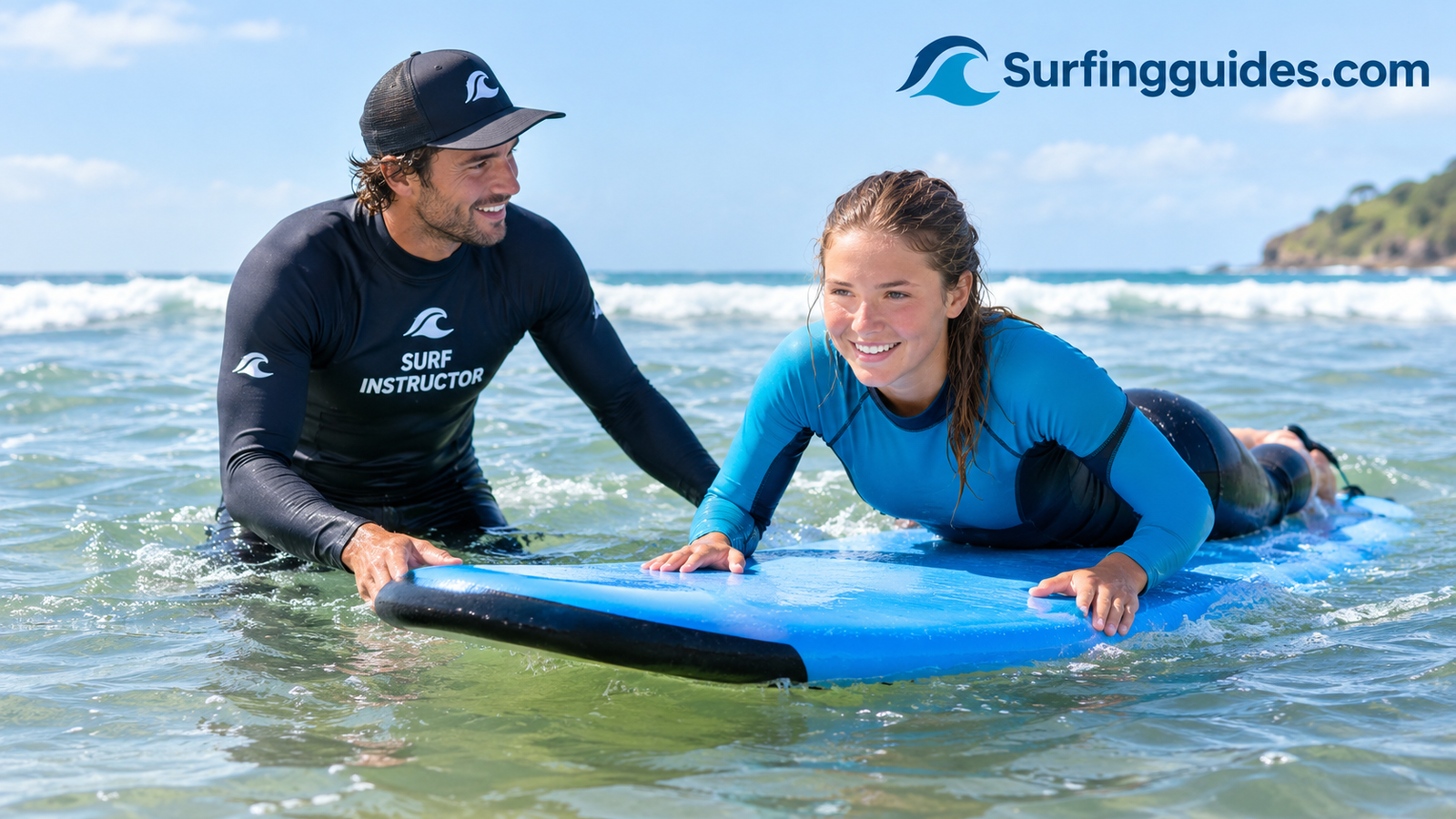
Almost everyone who watches a surfer glide along a wave asks the same question: how long until I can do that? It is a fair thing to wonder, because surfing has a reputation for being slow to reward newcomers. You will hear stories of people standing up on their first lesson, and equally of people who spent a whole summer wondering why they were still swallowing seawater.
Both stories are true, and that is exactly why a single number is never a satisfying answer. “How long does it take to learn surfing” depends on what you mean by learning, how often you can get in the water, what kind of waves you have access to, and how you practice. This guide breaks all of that down in plain language so you can set expectations that are honest, motivating, and realistic.
We will walk through the stages most surfers pass through, the factors that move your timeline in either direction, the fitness and gear choices that quietly save you weeks, and a simple practice plan you can start using right away. If you are still at the very beginning, our guide on how to start surfing pairs nicely with this one.
1. The Short Answer: How Long Does It Really Take?
If you want the quick version, here it is. Most people can stand up and ride a small, broken wave in a straight line within a handful of sessions, often during the first lesson or two. Riding unbroken green waves and turning with some control usually takes several months of regular surfing. Feeling genuinely comfortable and independent in a lineup, picking your own waves and handling a range of conditions, commonly takes a year or two of consistent practice. True mastery is a lifelong pursuit that even experienced surfers never quite finish.
Those timelines are broad on purpose. They describe what is common, not what is guaranteed. A strong swimmer who lives near a gentle beach break and surfs often can compress them. Someone who travels to the coast twice a year will stretch them out, and there is nothing wrong with that. It simply means progress arrives in bursts rather than steadily.
It also helps to know that surfing is considered physically and mentally demanding in the early stages. If you have wondered whether your struggles are normal, our article on whether surfing is hard goes deeper on why the learning curve feels steep and how to flatten it.
Start with the right foundation: a stable, forgiving board makes the early weeks far easier.
Check Price on Amazon2. What “Learning to Surf” Actually Means
Part of the confusion around timelines comes from the fact that “learning to surf” means different things to different people. A traveler who wants to stand up once on vacation has a very different goal from someone who wants to surf head-high waves at a local reef. Before you can estimate a timeline, it helps to define the finish line.
Milestone 1: Standing up on whitewater
This is the first win. You lie on your board, a small broken wave pushes you forward, and you pop to your feet and ride toward the beach. It feels like a huge accomplishment, and it is, but technically you are riding the foam, not the wave face. Many beginners have this moment in their first day or first few sessions.
Milestone 2: Catching unbroken waves
This is where surfing really begins. You paddle out past the breaking waves, position yourself, paddle into a wave before it breaks, and ride the open face. It requires timing, paddle strength, and an understanding of where waves peak. For most people this milestone is measured in months, not days.
Milestone 3: Riding along the face
Instead of heading straight to shore, you angle across the wave, shifting weight to trim along the face. This is the moment surfing starts to feel like gliding rather than sliding.
Milestone 4: Turning with intent
Bottom turns, top turns, and linking maneuvers belong here. You are no longer just riding, you are choosing a line. This stage often runs through the first one to two years for committed surfers.
Milestone 5: Lineup independence
Being comfortable on your own means reading conditions, knowing etiquette, handling a bad wipeout without panic, and choosing waves that suit your level. Many surfers consider this the true meaning of “knowing how to surf.”
Dialing in your basics? A good beginner board and a leash are the first two things on the list.
Check Price on Amazon3. A Stage-by-Stage Timeline
The table below gives a general picture of how progress tends to unfold for a beginner who surfs reasonably regularly. These are estimates based on common experience, not promises. Treat them as a map, not a deadline.
| Stage | Typical Timeframe | What You Can Do | Main Focus |
|---|---|---|---|
| First contact | First session or two | Lie on a board, paddle a short distance, stand on whitewater | Safety, balance, basic pop-up |
| Whitewater confidence | First few weeks | Stand up consistently on small foam waves | Stance, paddling, falling safely |
| Green-wave attempts | Roughly one to three months | Paddle out and catch the occasional unbroken wave | Timing, positioning, paddle fitness |
| Face riding | Roughly three to six months | Trim along small waves, begin simple turns | Weight shift, wave selection |
| Developing surfer | Six months to a year or more | Link turns, surf different conditions on a stable board | Flow, etiquette, reading waves |
| Independent surfer | One to two years or more | Handle a lineup, choose spots, adapt to conditions | Judgment, consistency, progression |
Three learner profiles to put the timeline in context
The weekend visitor. Imagine someone who lives hours from the coast and gets to the water about once a month. They will likely stand up during their first lesson, then spend many sessions relearning timing and balance because of the long gaps. After a year they may be comfortable on whitewater and just beginning to catch green waves. That is perfectly respectable progress for that amount of time in the water, and it shows why frequency matters more than calendar time.
The local regular. Now picture someone who lives near a friendly beach break and surfs three or four mornings a week. They tend to move through whitewater riding in a few weeks, start catching unbroken waves within a couple of months, and begin trimming and turning well inside the first half year. Their advantage is not talent, it is simply repetition on manageable waves.
The cross-trainer. A third surfer might surf only once or twice a week but swim regularly, practice pop-ups at home, and review video after sessions. Because their paddling is strong and their technique gets corrected quickly, they often progress faster than their time in the water would suggest. This is the clearest proof that smart practice can make up for limited surf time.
Notice that the earliest stages move quickly and the later ones stretch out. That pattern surprises many people. The first big win comes fast, which is encouraging, and then progress feels slower precisely when the skills become more subtle. Almost every surfer hits this stretch, and it is normal.
Another thing the table cannot capture is that learning is not linear. You might have a breakthrough week, followed by a month where you feel like you have forgotten everything. Flat spells, big swells, injuries, and travel all interrupt momentum. What matters is the long-term trend, not any single session.
Keep your sessions comfortable and focused with a quality rash guard for long days in the water.
Check Price on Amazon4. What Speeds Up or Slows Down Your Progress
Two people can start surfing on the same day and be at completely different levels a year later. The difference is rarely talent. It is almost always a mix of the factors below.
Frequency of surfing
This is the biggest single driver. Surfing is a skill built from muscle memory, balance, and pattern recognition, and all of those fade when you take long breaks. Surfing two or three times a week keeps the lessons fresh. Surfing once a month means you often spend half a session relearning what you knew last time.
Access to suitable waves
Small, soft, predictable waves are the ideal classroom. A gentle sandy beach with rolling whitewater gives you dozens of practice attempts per session. A steep, fast, or crowded break gives you a handful of attempts and a lot of stress. Where you learn matters as much as how often.
Quality of instruction and feedback
Surfing is difficult to self-diagnose because you cannot see yourself. A coach, a patient friend, or even video footage speeds things up considerably because it shortens the gap between making a mistake and understanding it.
Equipment that suits your level
A board that is too small, too thin, or too short for your size is one of the most common reasons beginners stall. Volume and stability help you catch waves earlier, and catching waves is the only way to improve.
Fitness and comfort in the water
Swimming ability, shoulder endurance, and general mobility all influence how much energy you have left to focus on technique. A surfer who tires after ten minutes of paddling cannot practice for long.
Age, body, and background
Younger people often pick up balance quickly, but age is not a barrier. Many people begin in their forties, fifties, and beyond. Backgrounds in skateboarding, snowboarding, gymnastics, yoga, or swimming can give you a head start, though none are required.
Mindset and patience
Surfers who treat every session as practice rather than a performance tend to progress faster. Frustration is part of the process. Those who stay curious and keep showing up usually outlast those who give up after a rough month.
Things that speed you up
- Surfing several times per week
- Learning on gentle, uncrowded waves
- Using a stable, high-volume board
- Getting feedback from a coach or video
- Building paddle fitness out of the water
Things that slow you down
- Long gaps between sessions
- Starting on a small, unstable board
- Learning in crowded or powerful surf
- Skipping fundamentals to chase tricks
- Being cold, tired, or poorly equipped
A stable foam board is one of the simplest ways to speed up your early progress.
Check Price on Amazon5. Fitness and Land Training: Your Secret Shortcut
Here is a truth that experienced surfers repeat constantly: most of surfing is paddling. Standing up is the glamorous part, but the majority of your time is spent lying on your board, paddling out, repositioning, and chasing waves. If your shoulders, back, and core run out of gas, your technique falls apart with them.
Understanding which muscles do the work helps you train smarter. Our breakdown of what muscles surfing works covers this in detail, but in short, expect heavy involvement from the shoulders, lats, upper back, core, and legs.
Swimming is the best foundation
Regular swimming builds the same shoulder endurance and breathing control you need in the surf. It also builds comfort in the water, which matters a lot when you get tumbled by a wave. If you are not yet a confident swimmer, spend time in a pool before heading to the ocean.
Strength and mobility
A few simple movements go a long way. Push-ups and rows build paddling strength. Planks and rotational core work stabilize your body on the board. Squats and lunges prepare your legs for the pop-up and stance. Mobility work for the hips, thoracic spine, and shoulders helps you move through the pop-up cleanly and recover from awkward falls.
Balance training
Skateboarding, balance boards, and surf trainers teach your body to make quick, subtle adjustments. They are not a replacement for the ocean, but they let you practice stance and weight shift on days when the waves are flat.
Conditioning and calorie demand
Surfing is a genuine workout. If you are curious about how much energy a session uses, see our guide on how many calories surfing burns. It is useful context for planning meals and recovery, especially once you are surfing several times a week.
Keep your land training consistent with simple, effective equipment.
Check Price on Amazon6. Gear That Shortens the Learning Curve
Good equipment will not surf for you, but the wrong equipment can quietly sabotage weeks of effort. The goal at this stage is not to buy the fanciest kit, it is to remove avoidable obstacles. If you want a complete checklist, our guide on what you need for surfing covers the essentials from board to wax.
The board
Beginners learn fastest on a wide, thick, buoyant board, often a soft-top foam board or a roomy longboard. Extra volume means easier paddling, earlier wave catching, and more forgiving balance. Smaller performance boards look appealing, but they reward skills you have not built yet. Many surfers who move to a small board too early spend months stuck, then return to a bigger one and progress rapidly.
The leash
A properly sized leash keeps your board close after a fall. It protects other surfers and saves you from swimming after a runaway board, which is exhausting and wastes valuable practice time.
Wax or traction
Wax on a traditional board, or a traction pad on some foam boards, keeps your feet from slipping during the pop-up. It is a small detail that makes a big difference in confidence.
Wetsuit or rash guard
Being cold is one of the fastest ways to cut a session short. In cooler water, a wetsuit that fits properly keeps you warm and extends your time in the water, which directly translates to more practice. Browse our roundup of the best wetsuits for surfing if you are choosing one. In warmer climates, a rash guard protects against board rash, wax abrasion, and sun.
What you wear matters
Comfort and mobility directly affect your pop-up and paddling. Our guide on what to wear surfing walks through sensible choices for different conditions so you stay comfortable and unrestricted.
Sun and skin protection
Hours in the water mean constant sun exposure, reflected off the surface as well. Choose water-resistant, reef-friendly sun protection and reapply regularly. Skipping this step does not just risk sunburn, it can force you to take days off, which slows progress.
Optional extras
Surf earplugs can help if you spend long hours in cold water. A board bag protects your equipment in transit. A simple repair kit saves a session when a ding appears. None are essential on day one, but they pay off as you surf more.
| Gear Item | Why It Helps Learning | Priority |
|---|---|---|
| Beginner board (foam or longboard) | Stability and easy wave catching | Essential |
| Leash | Keeps board close, saves energy | Essential |
| Wax or traction pad | Grip for the pop-up | Essential |
| Wetsuit (cool water) | Longer, more comfortable sessions | Very helpful |
| Rash guard (warm water) | Skin and sun protection | Very helpful |
| Sun protection | Prevents burnt days off | Very helpful |
| Board bag and repair kit | Protects your investment | Nice to have |
Get your grip sorted before your next session with quality surf wax.
Check Price on Amazon7. Lessons vs. Teaching Yourself
One of the most common questions new surfers ask is whether they need lessons at all. The honest answer is that you can learn without them, but lessons often shorten the path significantly, particularly in the first few sessions when bad habits are easiest to form.
What lessons give you
A good instructor teaches ocean safety, board handling, paddling technique, the pop-up, and how to read where waves break. They place you in the right spot and push you onto waves at a manageable size. Most importantly, they give instant feedback, so mistakes get corrected before they harden into habits.
What self-teaching gives you
Teaching yourself is cheaper and flexible, and plenty of great surfers started this way. However, without feedback you might spend weeks doing something slightly wrong without realizing it. Common examples include a late pop-up, feet too far back, or a paddling position that makes your board sink.
The best of both worlds
A practical approach is to book a short series of lessons at the beginning, then surf independently while applying what you learned, then return for a tune-up lesson every so often. If cost is a concern, our guide on how much surfing lessons cost helps you budget and compare options like group lessons and private coaching.
| Approach | Strengths | Watch Out For |
|---|---|---|
| Group lessons | Affordable, social, structured | Less individual attention |
| Private lessons | Personalized feedback, faster fixes | Higher cost per session |
| Surf camps | Immersive, lots of water time | Time and travel commitment |
| Self-taught | Flexible and budget friendly | Bad habits and safety gaps |
| Mentor friend | Local knowledge, free advice | Quality varies by teacher |
Turn practice sessions into progress with a helpful surfing instruction book for the days between waves.
Check Price on Amazon8. Where, When and in What Conditions You Learn
You can have perfect technique and still struggle in the wrong conditions. Choosing where and when to surf is a skill in itself, and it can easily save you months.
Pick the right kind of break
Sandy-bottom beach breaks with gentle, rolling waves are generally the friendliest for beginners. The bottom is forgiving, the waves break across a wide area so the crowd spreads out, and you can walk back to shore easily. Reef breaks, rocky points, and powerful shore breaks are better left until you have more experience.
Understand the tide
Tide changes how waves break, how steep they are, and how crowded the lineup becomes. Some spots work best around mid-tide while others only handle certain phases. Learning how local conditions respond to tide is a big step toward becoming independent. Our guide to what tide is best for surfing explains how to pick a window that gives you manageable waves.
Water temperature and season
Water temperature quietly shapes your timeline. Warm water lets you stay in for hours with minimal gear, which means more waves and faster learning. Cold water shortens sessions, stiffens muscles, and makes every movement a little clumsier, even in a good wetsuit. If you have a choice, learn during the warmest, calmest season your area offers, then continue through the cooler months once the basics feel natural. Seasonal swell patterns matter too, since many coasts have gentle summers and powerful winters.
Wave size and period
Smaller is better when you are learning. Waist-high or smaller waves with a gentle, mellow shape give you the most repetitions with the least risk. As you improve, you can gradually step up, but pushing into bigger surf too early usually backfires.
Wind and time of day
Light offshore winds or early morning calm conditions often produce cleaner waves. Strong onshore winds create choppy, messy surf that is much harder to read. Dawn sessions are a favorite for many surfers precisely because the water is glassy and the lineup is quiet.
Crowd levels
Crowds are not just an annoyance, they affect safety and progress. Fewer people means more waves and less pressure. If your local spot is packed, consider traveling a bit to find a quieter peak.
Plan your sessions smarter with a handy waterproof watch or tide tracker.
Check Price on Amazon9. Core Skills in the Right Order
Surfing is a stack of skills, and each one rests on the one before it. Trying to learn them out of order is a common reason progress feels slow. Here is the sequence that tends to work best.
Water comfort and ocean awareness
Before you worry about technique, get comfortable being in the surf. Learn how to fall safely, protect your head, hold your breath when held under, and recover calmly. Understanding currents, rips, and where the waves break keeps you safe and saves energy.
Board handling
Carrying your board, turning it around in the whitewater, and duck diving or turtle rolling under waves all make the session smoother. Good board handling means you spend less time fighting your equipment.
Paddling technique
Efficient paddling is the engine of everything else. Position yourself so the nose of the board sits just above the water, keep your head up, and use long, smooth strokes. Learning how to get out through the waves matters too, and our guide on how to paddle out surfing covers it step by step.
The pop-up
This is the move that takes you from lying down to standing in one fluid motion. It rewards repetition, so practicing on land before and between sessions makes a real difference. For a detailed breakdown, see how to pop up surfing. A clean pop-up often comes down to hand placement, quick feet, and keeping your eyes up rather than looking down at the board.
Wave selection and timing
Knowing which wave to paddle for, and when to start paddling, is arguably the hardest skill to learn because it is mostly experience. Watching the lineup from the beach before paddling out builds your eye for it.
Trim and turning
Once you are catching and riding unbroken waves, you can start angling across the face, shifting your weight, and linking simple turns. Smooth, relaxed movements beat rushed, aggressive ones at this stage.
Etiquette and lineup awareness
Surfing has unwritten rules about who has right of way, how to paddle around other surfers, and when to hold your position. Knowing them keeps you safe and welcome. The surfer closest to the peak generally has priority, and dropping in on someone else is a serious breach.
| Skill | How Long It Usually Takes | How to Practice |
|---|---|---|
| Safe falling and water comfort | First few sessions | Whitewater practice, calm conditions |
| Basic paddling | A few weeks | Pool swimming, flatwater paddling |
| Pop-up on whitewater | First sessions to a few weeks | Land drills plus small foam waves |
| Paddling out and duck diving | One to a few months | Frequent sessions in small surf |
| Catching green waves | Several months | Wave watching, timing practice |
| Turning and trimming | Six months and up | Video review, coaching, repetition |
A reliable pair of surf fins can make a noticeable difference in how your board tracks and turns.
Check Price on Amazon10. Mistakes That Stall Progress
Almost every surfer repeats the same handful of mistakes at some point. Spotting them early can save you months of frustration.
Moving to a smaller board too soon
It is tempting to downsize because smaller boards look cooler and seem more responsive. But volume is your friend while you are learning. Stay on a forgiving board until you can consistently catch green waves and trim comfortably.
Paddling out too far, too early
Trying to surf waves beyond your ability usually means fewer rides and more wipeouts. Choose waves you can realistically catch and ride, and let your range grow naturally.
Looking down at your feet
Where your head goes, your body follows. Looking at your board during the pop-up throws off your balance. Keep your eyes forward, toward where you want to go.
Standing too upright and stiff
A bent-knee, low, relaxed stance gives you balance and control. Stiff legs make the board feel unstable. Think of sitting into the movement rather than fighting it.
Neglecting paddle fitness
If you cannot paddle strongly, you will miss waves no matter how good your pop-up is. Build endurance both in and out of the water.
Skipping the warm-up
A few minutes of stretching and mobility prevents strains and helps you perform better from the first wave. It also reduces the risk of tweaking a shoulder or back.
Comparing yourself to others
Social media shows polished highlight reels, not the hundreds of failed attempts behind them. Compare yourself to where you were last month, not to someone else’s progress.
Inconsistent practice
Long breaks reset muscle memory. Even short, regular sessions beat sporadic marathon weekends.
Habits worth building
- Warm up before every session
- Watch the lineup before paddling out
- Review video of your rides
- Keep a simple surf log
- Celebrate small improvements
Habits worth breaking
- Chasing big waves too soon
- Looking at your feet mid-ride
- Surfing with poor-fitting gear
- Ignoring local etiquette
- Giving up after a bad week
Protect your progress with a simple board repair kit so small dings do not cancel sessions.
Check Price on Amazon11. A Practical Weekly Practice Plan
Knowing the theory is helpful, but a plan turns it into progress. The schedule below is flexible. Adjust it to fit your life and the waves you actually get.
For the first month
Aim for two to three sessions a week in small, gentle waves. Spend the first part of each session on paddling and whitewater pop-ups, and the last part simply enjoying yourself. Between sessions, practice your pop-up on a mat or carpet ten to fifteen times, and do a short mobility routine.
For months two and three
Start paddling out beyond the whitewater when conditions allow. Focus on watching waves, timing your paddle, and catching a few unbroken ones. Build in a swim or strength session each week to boost endurance.
For months four to six
Concentrate on trimming along the face and making gentle turns. Film a few sessions and compare footage from week to week. Consider a tune-up lesson to correct anything you cannot see for yourself.
For the second half of the year and beyond
Expand to different spots and conditions, try different board shapes when you are ready, and keep refining your fundamentals. This is the point where surfing becomes less about overcoming obstacles and more about enjoying the craft.
| Day | Activity | Focus |
|---|---|---|
| Monday | Swim or paddle-focused strength | Shoulder endurance |
| Tuesday | Surf session | Paddling and wave catching |
| Wednesday | Mobility and pop-up drills | Flexibility and muscle memory |
| Thursday | Rest or light cardio | Recovery |
| Friday | Surf session | Timing and positioning |
| Saturday | Longer surf session | Applying everything |
| Sunday | Review video and rest | Reflection and planning |
How to tell you are actually improving
Because progress in surfing is gradual, it helps to track a few simple markers rather than relying on feeling. Count how many waves you catch in a typical session. Note how often you stand up after catching one. Notice how far into a session you can paddle before fatigue sets in, and whether you can reach the lineup without needing a long rest. Pay attention to how you handle wipeouts, since staying calm is a real skill. If even two of these markers improve over a month, you are moving forward, even when the big milestones feel far away.
It is also useful to revisit your goals every few months. A beginner who started hoping to stand up once may find that, six months later, they want to ride longer waves or try a different board. Updating your targets keeps the process exciting and gives your practice a clear direction.
Keeping a short log helps too. Write down the date, conditions, board, and one thing that went well and one thing to work on. After a few weeks you will see patterns that are impossible to notice session by session.
Capture your sessions on camera and watch your technique improve over time.
Check Price on Amazon12. Safety, Plateaus and Staying Motivated
Learning to surf is as much about attitude and judgment as it is about technique. The surfers who last are those who stay safe, stay patient, and keep having fun.
Respect the ocean
Every surfer, no matter how skilled, needs to respect the ocean. Check conditions before you go, know your limits, and never surf alone in unfamiliar or challenging surf. If you are wondering how risky the sport really is, read our guide on whether surfing is dangerous. Most risks can be reduced with good preparation, sensible spot selection, and awareness of other surfers.
Expect plateaus
Almost everyone hits a stretch where nothing seems to improve. These plateaus are usually a sign that your body is consolidating skills. Try changing something small, such as a different spot, a different board, or a lesson, to jolt yourself out of the rut.
A quick plateau-breaking checklist
When progress stalls, run through a short list before assuming something is wrong with you. Is your board still the right size and volume for your level? Are you surfing waves that are too big, too steep, or too crowded? Has your paddle fitness slipped? Have you filmed yourself recently? Have you taken a lesson since the early days? Often one small change, such as switching to a calmer spot or adding a swim session, is enough to restart momentum.
Set process goals, not just outcome goals
“Catch ten waves this session” is more useful than “be a good surfer.” Small, specific targets give you wins you can measure and keep motivation high.
Find your community
Surfing with friends or joining a local group keeps you accountable and makes sessions more enjoyable. Experienced locals can also share valuable knowledge about the break, the tides, and the hazards.
Take care of your body
Stretch, hydrate, eat well, and rest. Overuse injuries, especially in the shoulders and lower back, are common among enthusiastic beginners. Listening to your body keeps you in the water longer.
Remember why you started
Surfing is supposed to be fun. Some of the best sessions are the ones where you catch very little but spend a beautiful morning in the ocean. Progress will come, but the joy of being out there is the real reward.
Stay protected during long sessions with water-resistant sun care made for the ocean.
Check Price on AmazonFrequently Asked Questions
How long does it take to stand up on a surfboard?
Many beginners stand up on whitewater waves within their first one or two lessons. Standing up on small unbroken waves usually takes longer, often a few weeks to a few months of regular practice, depending on how often you surf and the conditions you learn in.
Can I learn to surf in a week?
You can learn the basics in a week, especially with daily lessons or a surf camp. That typically means safety, paddling, and standing up on small waves. Becoming an independent surfer who can handle a lineup takes much longer, so think of a week as a strong start rather than the finish line.
How many hours of surfing does it take to get good?
There is no exact figure, and it varies by person. Most surfers feel noticeably competent after many dozens of hours in the water and keep improving for years. Focusing on quality time in the water, with feedback, matters more than hitting a specific number.
Is it harder to learn surfing as an adult?
Adults can absolutely learn to surf. Children may pick up balance quickly and fear less, but adults often compensate with better focus, patience, and the ability to understand instruction. Fitness and flexibility matter more than age, so look after your body and start with gentle waves.
How often should I surf to improve quickly?
Two to three sessions a week is a strong target for steady progress. If you can only surf occasionally, supplement with swimming, strength training, and pop-up practice on land so you retain skills between sessions.
Do I need to be a strong swimmer to learn surfing?
You do not need to be a competitive swimmer, but you should be comfortable in the water and able to swim confidently without a board. Strong swimming ability makes you safer and helps you recover from wipeouts without panic.
Is surfing harder than skateboarding or snowboarding?
Many people find surfing harder because the surface constantly moves and you spend much of your time paddling rather than riding. Backgrounds in skateboarding or snowboarding can help with balance and stance, but you still need to learn paddling, timing, and ocean awareness.
What is the best type of board for learning?
A wide, thick, high-volume board, such as a soft-top foam board or a longboard, is usually best for beginners. It paddles easily, catches waves early, and forgives balance mistakes, which gives you more successful rides and faster progress.
Should I take lessons or learn on my own?
Lessons are not mandatory, but they typically speed up learning and improve safety. A few lessons at the start, followed by regular independent practice and occasional tune-ups, is a popular and effective approach for many beginners.
Why am I not improving even though I surf regularly?
Common reasons include being on a board that is too small, surfing in conditions that are too challenging, lacking paddle fitness, or repeating a technical flaw you cannot see. Getting feedback from a coach or reviewing video often reveals the culprit quickly.
How long does it take to learn to turn on a wave?
Basic turns usually begin to appear after you can reliably catch and ride unbroken waves, which for many surfers is somewhere in the several-month range. Smooth, controlled turning develops gradually over the first year or two with consistent practice.
Can I keep progressing if I only surf on vacation?
Yes, but progress will be slower and more uneven. To make vacation sessions count, train your paddling strength and pop-up at home, take a refresher lesson when you arrive, and choose gentle conditions so you maximize wave count.
Conclusion: Your Timeline Is Yours to Shape
So, how long does it take to learn surfing? You can stand up on a wave in a day or two, ride unbroken waves in a matter of months, and feel like a confident, independent surfer after a year or two of steady effort. The exact timeline depends on how often you surf, where you learn, the gear you use, and how well you practice.
The good news is that almost every factor is something you can influence. Surf often, choose gentle waves, ride a forgiving board, build your paddle fitness, and get feedback along the way. Stay patient through the plateaus, respect the ocean, and keep it fun. The surfers who thrive are not the ones with natural talent, they are the ones who keep showing up.
Ready to take the next step? Get your gear sorted, book a lesson, and head out for your next session with a clear plan. Your first great wave may be closer than you think.
Start your surfing journey with everything you need in one place.
Check Price on Amazon